This guide covers three sestieri that visitors tend to underrate. Castello, just east of San Marco, is the largest: it begins with the Riva degli Schiavoni and its grand hotels, passes churches full of masterpieces and reaches the Arsenale, the Biennale Giardini and Sant’Elena, where Venice feels almost like a village. On the other side of Rialto, San Polo and Santa Croce are the commercial and everyday heart of the right bank: the Rialto market, the Frari basilica, the Scuola Grande di San Rocco, Campo San Polo and the museums along the Grand Canal.
Many of these visits aren’t sold online, or are sold only on the venue’s own site, and several churches are free. Here are the official prices, the few Tiqets alternatives and how to plan your routes.
Prices and where to buy, in one table
| Place | Sestiere | Official price | Where to buy |
|---|---|---|---|
| Frari basilica | San Polo | €8 · over-65s €5 · students €3 | At the desk; online €9.50 via GetYourGuide |
| Scuola Grande di San Rocco | San Polo | €12 · with the church €14 | On site only |
| Casa di Carlo Goldoni | San Polo | €7 · reduced €3.50 | MUVE, also in the 18th-century Museums ticket |
| Da Vinci Interactive Museum | San Polo | discounted online price on its site | Tiqets €9.86 |
| Ca’ Pesaro | Santa Croce | €15 · reduced €7.50 | MUVE or Tiqets €15 |
| Natural History Museum | Santa Croce | €15 · reduced €7.50 | MUVE or Tiqets €15 |
| Palazzo Mocenigo | Santa Croce | €15 · reduced €7.50 | MUVE, in the 18th-century Museums ticket |
| San Zaccaria, museum and crypt | Castello | €3.50 · students €2.50 | On site (Chorus) |
| Santi Giovanni e Paolo | Castello | admission ticket, check the website | On site |
| Biennale | Castello | €30 · 3 days €40 | Online only at labiennale.org |
Where Tiqets sells the same ticket as the civic museum (Ca’ Pesaro, Natural History), the price is identical; the advantage is having everything in one app, but these tickets are non-refundable. Prices can change, so always check when you buy.
-
from €15 per person
Book on Tiqets -
from €15 per person
Book on Tiqets -
from €9.86 per person
Book on Tiqets
Castello: from San Zaccaria to the Arsenale
San Zaccaria
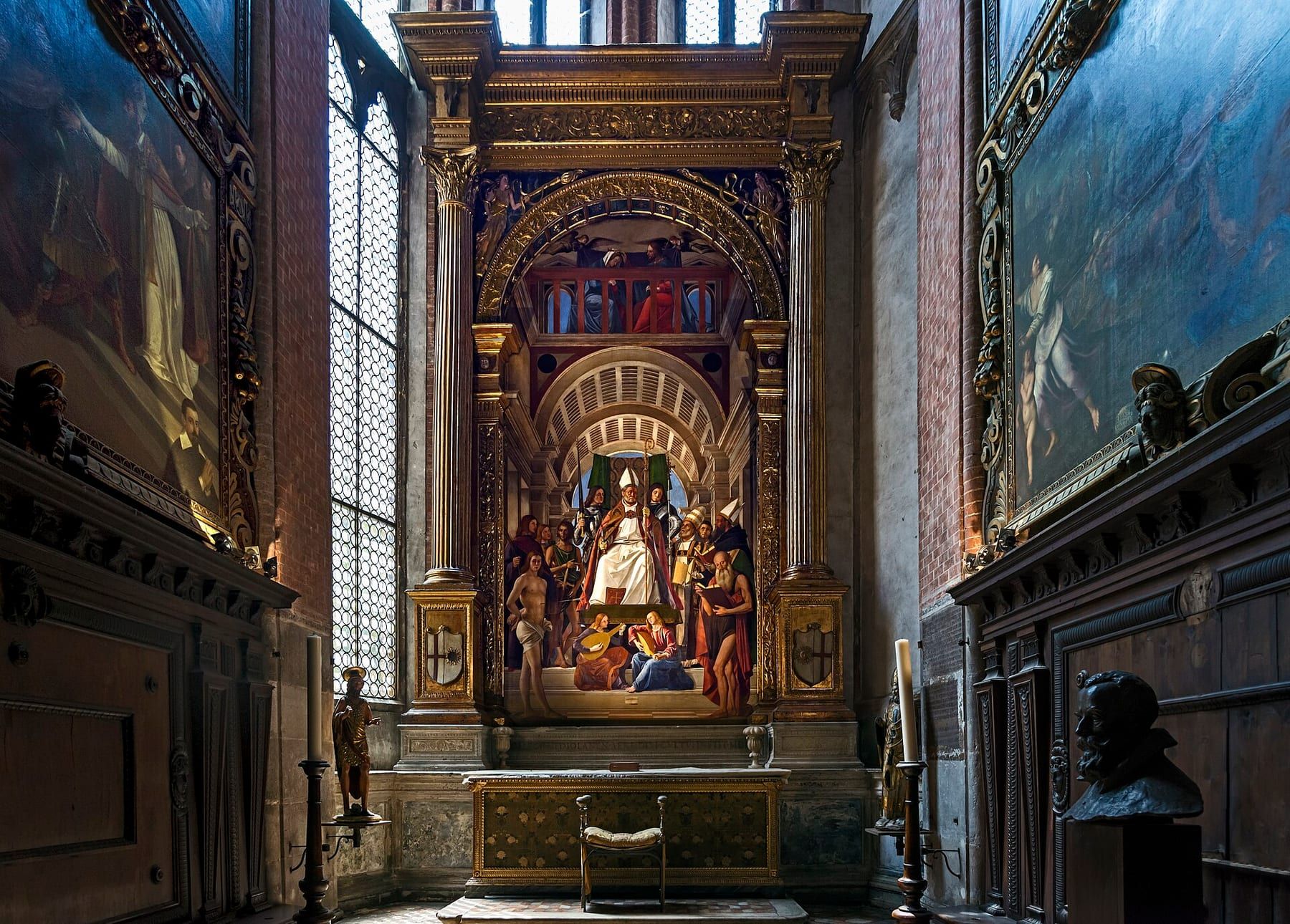
Two minutes from the Riva degli Schiavoni, San Zaccaria has Giovanni Bellini’s San Zaccaria Altarpiece on its left wall, still in the place it was painted for. The church is free; for €3.50 (students €2.50) you can see the museum, the chapel of San Tarasio with polyptychs by Antonio Vivarini and Giovanni d’Alemagna and frescoes by Andrea del Castagno, and the crypt, probably 10th-century, flooded for much of the year: its columns reflected in the water are one of the most unusual sights in Venice. Open daily 10:00–18:00.
Santi Giovanni e Paolo and Campo Santa Maria Formosa
Santi Giovanni e Paolo, known as “San Zanipolo”, is the Dominicans’ great Gothic church, where many doges are buried. In the campo outside stands Verrocchio’s equestrian monument to Bartolomeo Colleoni and the marble façade of the Scuola Grande di San Marco, now the hospital entrance. The basilica charges admission: Monday–Saturday 9:00–17:45, Sundays and holidays 12:00–17:45. A few minutes away is Santa Maria Formosa, free to enter in the Chorus circuit Monday–Saturday 10:30–17:00, as is San Giovanni in Bragora, where Antonio Vivaldi was baptised.
Scuola di San Giorgio degli Schiavoni
A ground-floor hall with one of the most poetic cycles of the Renaissance: the stories of St George, St Tryphon and St Jerome painted by Vittore Carpaccio in the early 16th century, including St George and the Dragon. Only a few people are let in at a time; according to the Scuola it is open every day except Tuesday. Check hours and price on its website before you go.
The Arsenale, Via Garibaldi and the Giardini
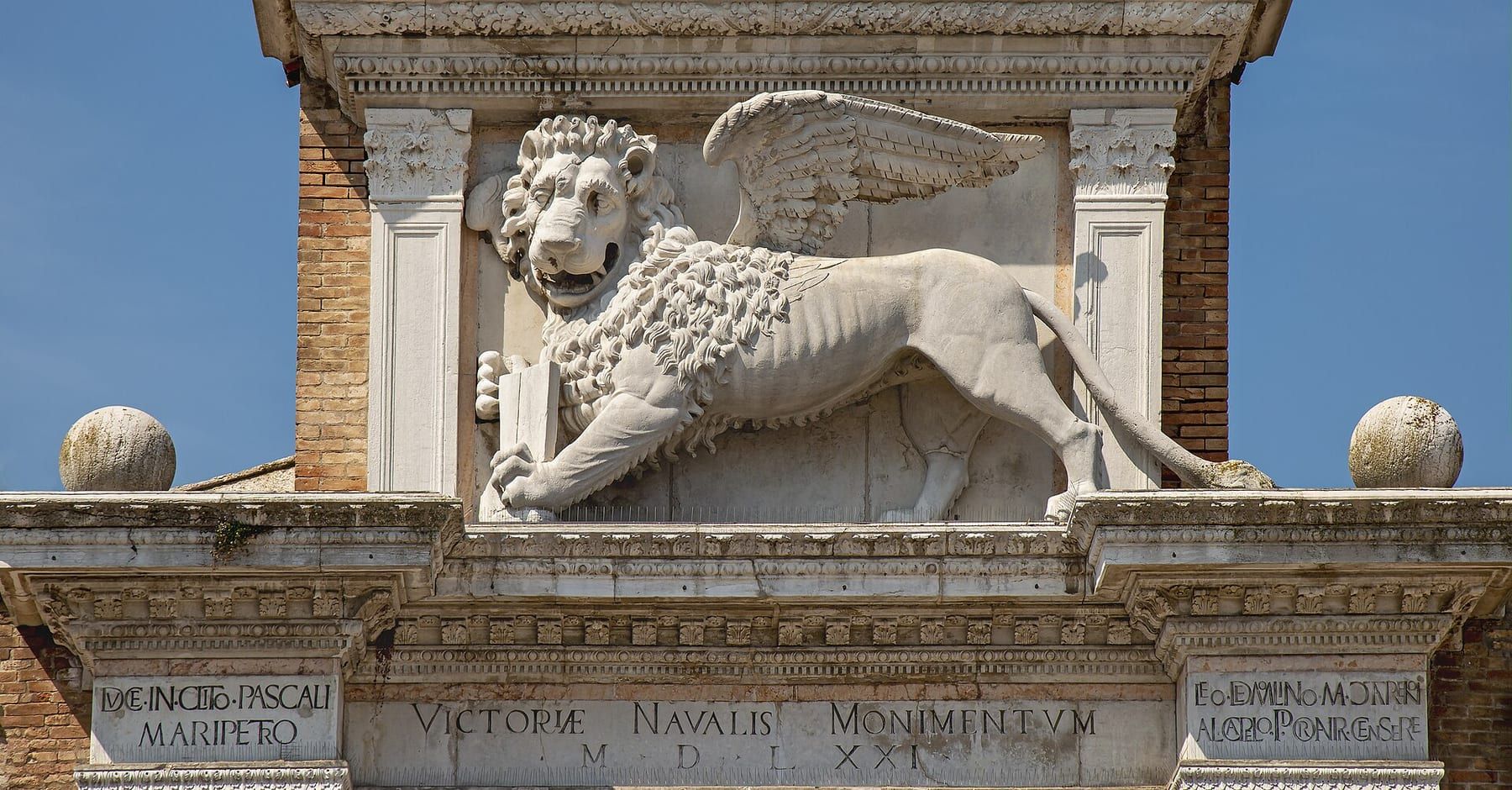
The Arsenale was the Republic’s state shipyard, able to fit out a fleet at an almost industrial pace. Its land gate, the Porta Magna, is guarded by stone lions, some brought back from Greece as spoils of war. The inside is visited mainly during the Biennale. Via Garibaldi, considered the widest street in the city, was created by filling in a canal in the early 19th century: today it is Castello’s everyday living room, with bars, fruit sold from boats and children on bikes. At its far end, a bridge leads to San Pietro di Castello, the cathedral of Venice until the 19th century, free to enter in the Chorus circuit.
The Venice Biennale
The Biennale fills the Giardini, with national pavilions built from 1907 onwards, and the Corderie and docks of the Arsenale. The Art Exhibition and the Architecture Exhibition alternate each year, from May to late November. For the latest Art edition a full ticket cost €30 (over-65s and residents €20, students and under-26s €16), with one entry to the Giardini and one to the Arsenale, even on different days; the 3-day pass was €40. Tickets are sold online only. Closed on Mondays, with a few exceptions; in summer 11:00–19:00, in autumn 10:00–18:00. Stops: Giardini (lines 1, 4.1, 5.1) and Arsenale (lines 1, 4.1). Allow at least half a day for each venue.
Music in Castello
On the Riva degli Schiavoni, the Pietà church, linked to Vivaldi, who taught at the Ospedale della Pietà, hosts Four Seasons concerts. On Tiqets the I Virtuosi Italiani concert costs €32, lasts about 1 hour 10 minutes and can be cancelled free of charge before the date. Other concerts are on the theatres and shows page.
-
from €32 per person
Book on Tiqets
San Polo: Rialto, the Frari and San Rocco
The Rialto market
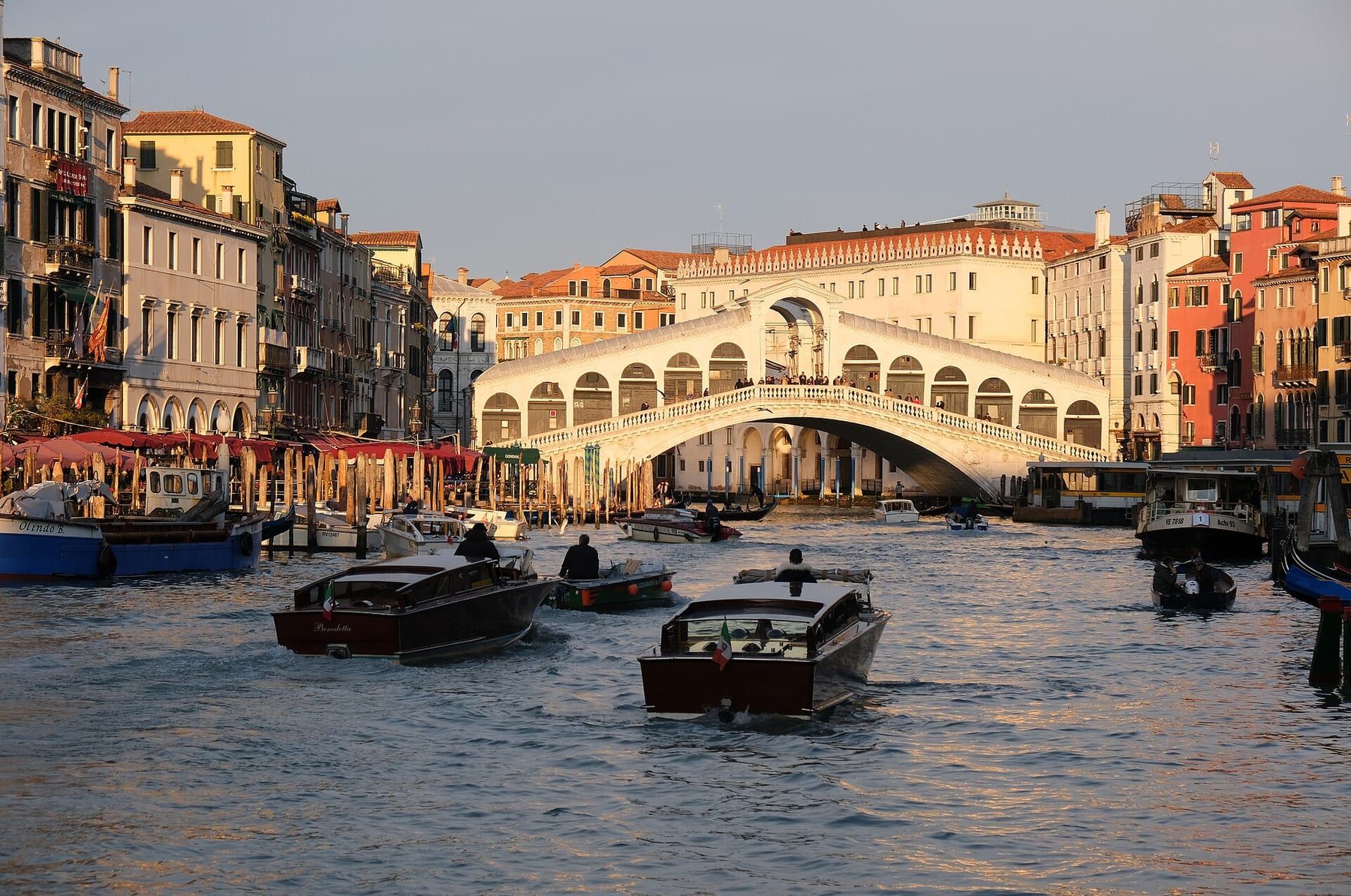
Coming down the Rialto Bridge into San Polo you enter the city’s oldest market. The Erbaria sells fruit and vegetables from the lagoon, normally Monday to Saturday mornings; the Pescheria, under the neo-Gothic loggia on the Grand Canal, Tuesday to Saturday until about midday. Everything is closed on Sundays. Go between 8:00 and 10:00 to watch Venetians do their shopping: moeche (soft-shell crabs), canoce (mantis shrimp) and schie (tiny lagoon shrimp) are things you’ll only find here. Around the market, bàcari serve cicchetti and ombre of wine from the morning. To cross to the other bank without going back to the bridge, the Santa Sofia–Pescaria traghetto costs €2.
The Frari basilica
Santa Maria Gloriosa dei Frari is San Polo’s great Franciscan church, and it holds Titian’s Assumption on the high altar, one of the most important paintings in Venice. Look out too for Titian’s Pesaro Madonna, Donatello’s wooden St John the Baptist, Canova’s pyramid monument and Titian’s tomb. Giovanni Bellini’s triptych in the sacristy is the subject of a restoration and study project: check whether it is on view.
Ticket at the desk €8, over-65s €5, students aged 12–29 €3; free under 12 and for residents. Online, through GetYourGuide, it costs €9.50 with easier entry and a 10% bookshop voucher. Hours: in summer Monday–Friday 9:00–19:30, Saturday 9:00–18:00; in winter Monday–Saturday 9:00–18:00; Sundays and public holidays 13:00–18:00 only. Last entry 30 minutes before closing. It is a working church: dress appropriately. The Frari is not part of the free Chorus circuit. Stop: San Tomà (lines 1 and 2). More on the San Giorgio, Salute and Frari page.
Scuola Grande di San Rocco
Three minutes from the Frari, the Scuola Grande di San Rocco is Tintoretto’s masterpiece: over more than twenty years he decorated the Sala terrena, the Sala Capitolare upstairs and the Sala dell’Albergo, home to the huge Crucifixion. There are also works by Titian and Tiepolo. The ceilings are very high: take your time.
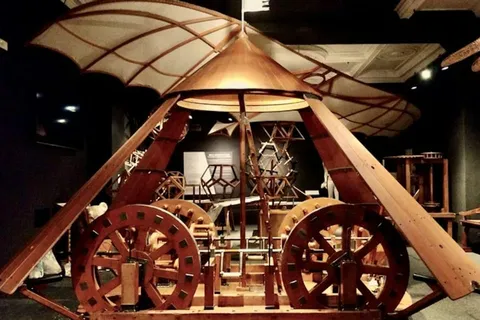
€12 full, €10 over-70s, €8 students under 26, €3 ages 8–18, free under 8; the church of San Rocco alone €3.50, combined ticket €14; audio guide €5 on your own phone. Open daily 9:30–17:30, ticket desk until 17:00; closed on New Year’s Day, Christmas and Easter. There are no online sales: you buy at the entrance. The same complex houses the Da Vinci Interactive Museum, with interactive machines rebuilt from Leonardo’s notebooks, bookable on Tiqets at €9.86. See also Jewish Museum, Leonardo and Music.
Campo San Polo and Goldoni’s House
Campo San Polo is usually described as the largest in Venice after the Piazza: a wide space ringed by Gothic palaces, often set up in summer for events and open-air cinema. The church of San Polo is free; the Oratory of the Crucifix, with Giandomenico Tiepolo’s Stations of the Cross, costs €3.50 in the Chorus circuit.
Halfway to the Frari, Carlo Goldoni’s House, where the playwright was born, is a small MUVE museum: €7, open 10:00–16:00, closed Wednesdays, accessible with a lift.
Santa Croce: from Piazzale Roma to the Grand Canal
Santa Croce starts at Piazzale Roma, where the roads end, but within minutes you are in quiet campi. On the Grand Canal, at the San Stae stop (line 1), there are three civic museums:
- Ca’ Pesaro: the Gallery of Modern Art with Klimt (Judith II, sometimes out on loan), Rodin, Kandinsky, de Chirico, and on the top floor the Oriental Art Museum with its Edo-period Japanese collection. €15, closed Mondays.
- Palazzo Mocenigo: 18th-century textiles, costume and perfume in the rooms of a family that produced seven doges. €15, closed Mondays.
- Natural History Museum, in the Fontego dei Turchi: whale skeletons and an aquarium of the Adriatic’s tegnùe reefs. €15, closed Mondays, good for children.
Inland, Campo San Giacomo dell’Orio is one of the residents’ favourite squares; its church, with a wooden ceiling shaped like a ship’s keel, is free in the Chorus circuit. Museum guide: Ca’ Pesaro and Ca’ Rezzonico.
Across the border: the Bovolo and Palazzo Pisani are in San Marco
They are often lumped in with Rialto, but both are in the San Marco sestiere, a few minutes’ walk from the bridge.
- Scala Contarini del Bovolo, near Campo Manin: the spiral staircase (“bovolo” means snail shell in Venetian) commissioned by Pietro Contarini in 1499, 26 metres tall, with a belvedere over the rooftops. Official €9 (reduced €7, free under 12), open daily; on Tiqets €10 including the Tintoretto Room.
- Palazzo Pisani, near Campo Santo Stefano, home of the Benedetto Marcello Conservatory: guided visits only, maximum 20 people, taking in the ballroom, an original Vivaldi manuscript and a terrace 31 metres up, billed as the highest in the city. On Tiqets €20, free cancellation before the time slot. Steep stairs: not suitable for anyone with limited mobility.
-
from €10 per person
Book on Tiqets -
from €20 per person
Book on Tiqets
Itineraries and tips
Half a day in San Polo: the Rialto market at 8:30, a cicchetto in a bàcaro, Campo San Polo, the Frari when it opens in the afternoon (on Sundays at 13:00) and San Rocco until closing. Don’t do it the other way round: by 12:00 the market is over.
Half a day in Castello: San Zaccaria at opening time, Santi Giovanni e Paolo, Santa Maria Formosa, then Via Garibaldi for lunch and the Giardini. During the Biennale months, give the exhibition a day of its own.
- Closing days: on Mondays Ca’ Pesaro, Palazzo Mocenigo, Natural History and the Biennale close; on Wednesdays Goldoni’s House; on Sunday mornings the Frari and the Chorus churches.
- Churches: the Chorus churches are free; you pay only for spaces inside, such as the San Zaccaria crypt or the San Polo Oratory. The rest is in the guide to Venice churches.
- Getting around: from San Zaccaria, line 1 runs to Rialto Mercato and San Stae; line 2 to San Tomà. The official ACTV ticket costs €9.50 for 75 minutes. With luggage, Santa Croce near Piazzale Roma is the easiest base; if you’d rather arrive at the hotel by water taxi, fares are on taxi.venice.it.
- Acqua alta: the Rialto area and the Riva degli Schiavoni flood early; in the autumn months check the forecast.
To compare with the other districts, go back to the sestieri of Venice; for the sestiere south of San Polo, see Dorsoduro.
Frequently asked questions
What is there to see in Castello, Venice?
San Zaccaria with Giovanni Bellini's altarpiece and the crypt (€3.50), the basilica of Santi Giovanni e Paolo with the tombs of the doges, the Arsenale with its Porta Magna, Via Garibaldi and, from May to November, the Biennale at the Giardini and the Arsenale. Further east, San Pietro di Castello and Sant'Elena are among the quietest corners of the city.
What is there to see in San Polo, Venice?
The Rialto market in the morning, the Frari basilica with Titian's Assumption (€8), the Scuola Grande di San Rocco with Tintoretto's cycle (€12), Campo San Polo and Carlo Goldoni's House. In half a day you can see the market, the Frari and San Rocco.
Can you buy Scuola Grande di San Rocco tickets online?
No. The Scuola sells tickets only at the entrance: €12 full, €8 students under 26, €3 ages 8–18, free under 8. It is open daily 9:30–17:30, with the ticket desk closing at 17:00.
How much does it cost to enter the Frari?
At the desk €8 full, €5 over-65s and €3 students aged 12–29; free under 12 and for residents. Online, through GetYourGuide, it costs €9.50 with easier entry and a bookshop voucher. On Sundays and public holidays you can visit only from 13:00.
When is the Rialto market open?
As a rule the Erbaria fruit and vegetable market is open Monday to Saturday mornings and the Pescheria fish market Tuesday to Saturday until about midday. Everything is closed on Sundays. The best time is between 8:00 and 10:00.
Is the Biennale open all year?
No. There is one exhibition each year, alternating Art and Architecture, from May to late November. It is closed on Mondays, with a few exceptions. A full ticket costs €30 and gives one entry to the Giardini and one to the Arsenale, even on different days; it is sold online only.
Are the Scala Contarini del Bovolo and Palazzo Pisani in San Polo?
No, both are in the San Marco sestiere: the Bovolo near Campo Manin, Palazzo Pisani near Campo Santo Stefano. From Rialto they are a 5–15 minute walk.
What is Campo San Polo?
It is usually described as the largest campo in Venice after St Mark's Square, surrounded by Gothic palaces and the church of San Polo. In summer it often hosts events and open-air cinema; the rest of the year it is a neighbourhood square with children and benches.
Official sources
- Basilica dei Frari — Admission ticket
- Basilica dei Frari — Visiting hours
- Scuola Grande di San Rocco — Information
- La Biennale di Venezia — Information
- Chorus Venezia — San Zaccaria museum and crypt
- Basilica dei Santi Giovanni e Paolo
- Ca' Pesaro — Visitor information
- Casa di Carlo Goldoni — Tickets
- Scala Contarini del Bovolo — Hours and tickets