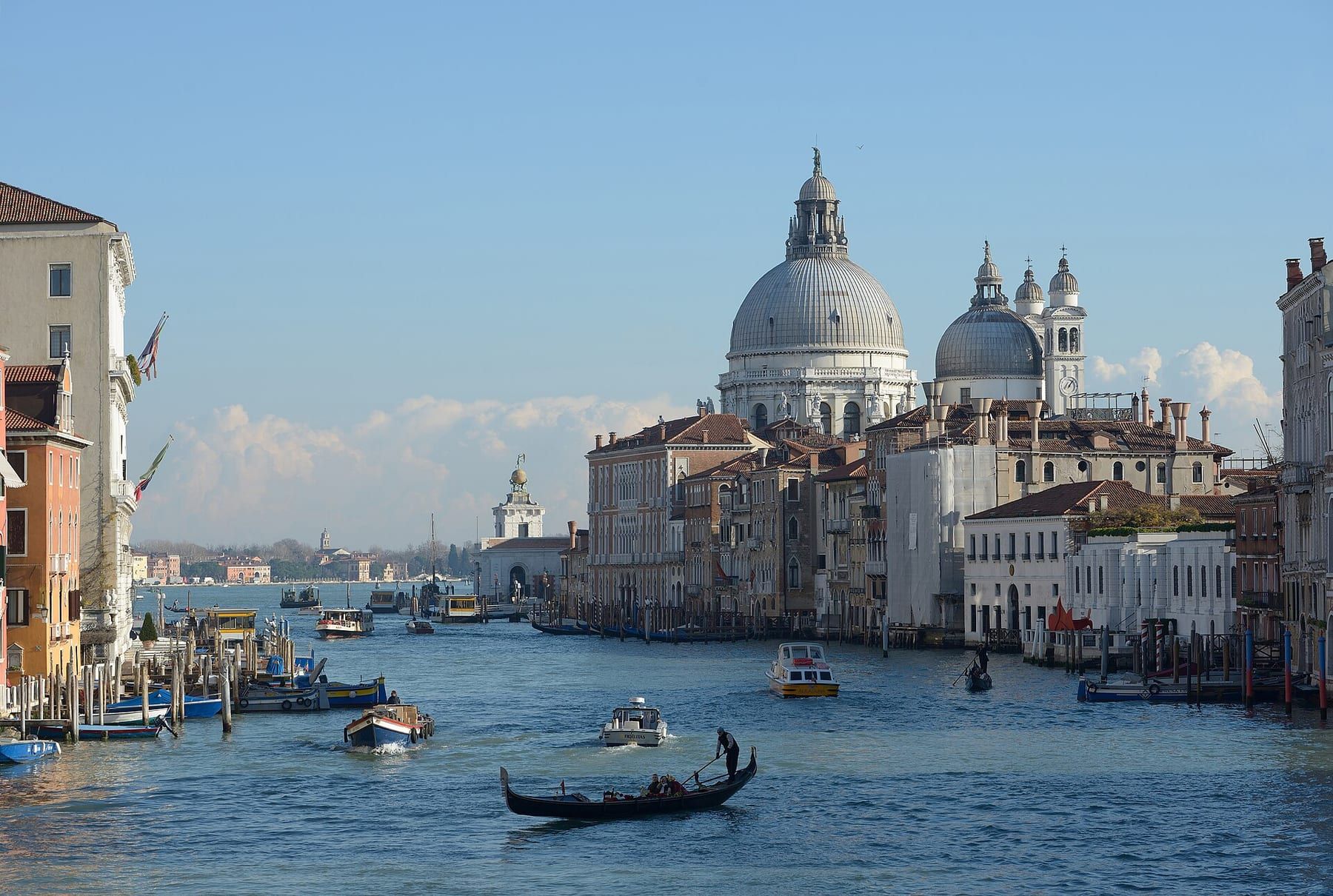
What to see in Venice depends on how much time you have, but the order of priorities hardly changes: San Marco first, then the Grand Canal, then the art of Dorsoduro and the lagoon. Below are the twenty things to do in Venice that really matter, each with its official price and a link to the in-depth page. Two warnings before you start: St Mark’s Basilica can only be visited with a booking, and on peak spring and summer days, day visitors pay the access fee.
The 20 best things to do in Venice
- St Mark’s Square, free. Go early in the morning or after sunset, when you can hear the historic cafés’ orchestras and the square empties out.
- St Mark’s Basilica, €10. Golden mosaics spanning more than a thousand years; the visit lasts no more than 20 minutes along a fixed route, plus €10 for the Pala d’Oro or for the Museum with the original horses and the terrace over the square.
- Doge’s Palace, €35. The Great Council and Senate chambers, the Armoury, the New Prisons and the passage inside the Bridge of Sighs, all on the same ticket.
- St Mark’s Campanile, €15. It is 98.6 metres tall and a lift takes you up in about 30 seconds; in summer it stays open into the evening.
- The Grand Canal by vaporetto, €9.50. Line 1 stops at every landing stage from Piazzale Roma to San Marco: it’s the cheapest cruise in town.
- Rialto Bridge and market, free. The late-16th-century stone bridge and, just behind it, the Pescheria fish market (Tuesday to Saturday) and the Erbaria produce market, both in the morning.
- A gondola ride, €90 per boat. The municipal tariff for 30 minutes by day, up to 5 people; to cross the Grand Canal standing up, the €2 traghetto is enough.
- Gallerie dell’Accademia, €20. Bellini, Carpaccio, Titian, Veronese and Giorgione’s The Tempest in Room VIII; under-18s get in free.
- Peggy Guggenheim Collection, €17. The 20th century in an unfinished palazzo on the Grand Canal, with a sculpture garden; closed on Tuesdays.
- Frari Basilica, €8. Titian’s Assunta on the high altar and Donatello’s wooden St John the Baptist.
- Santa Maria della Salute, free. The great votive church on the tip of Dorsoduro; the sacristy with Tintoretto costs €6.
- San Giorgio Maggiore, basilica free. Palladio three minutes by vaporetto from San Zaccaria, plus the Fondazione Cini’s Borges Labyrinth (€15). The bell tower is currently closed for works.
- Murano, Glass Museum €15. Furnaces, glass-blowing demonstrations and the church of Santi Maria e Donato with its 12th-century mosaic floor.
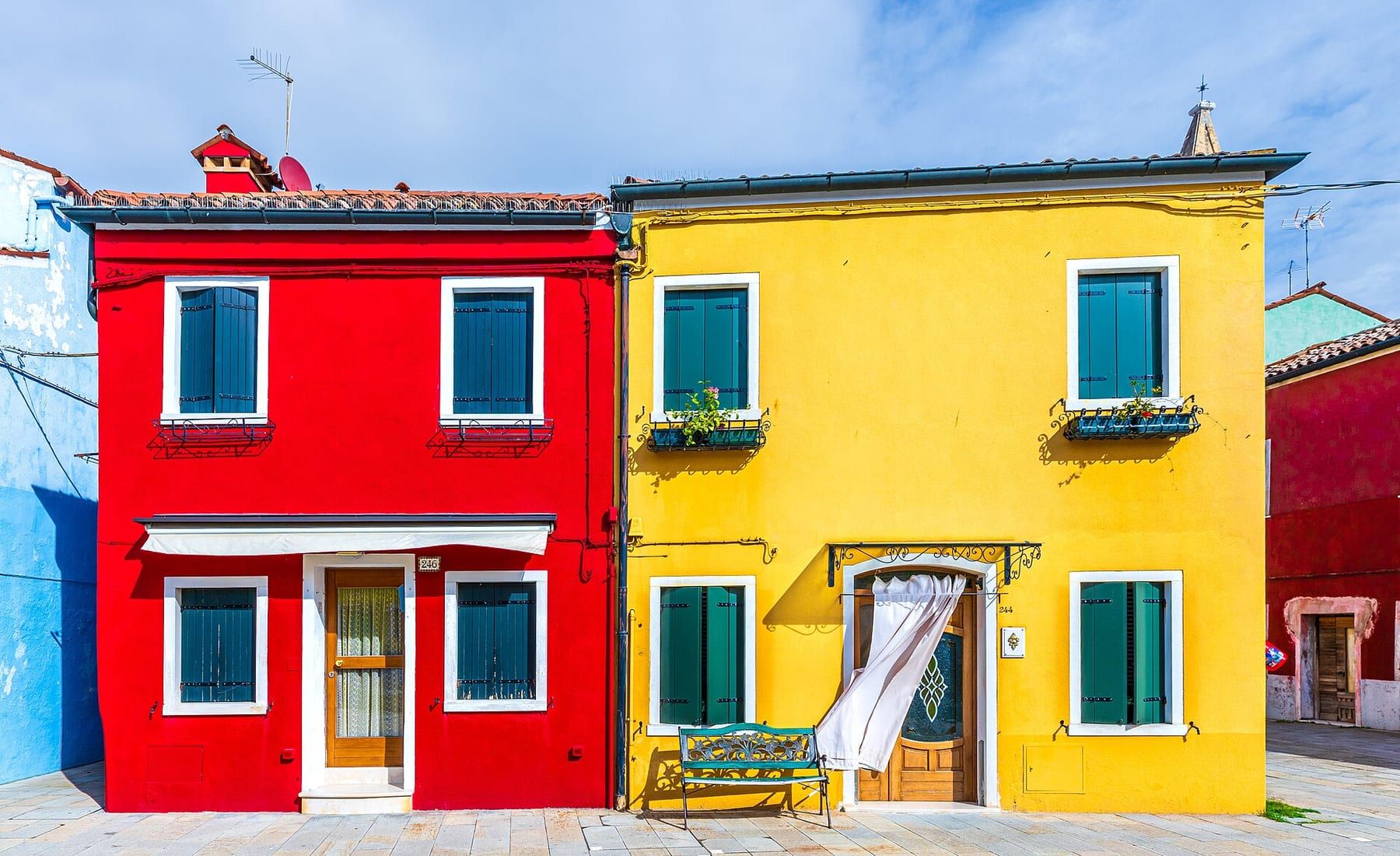
- Burano, Lace Museum €7. Coloured houses, a leaning bell tower and fish trattorias; reached on line 12 from Fondamente Nove.
- Torcello, basilica €5. Founded in 639, with a mosaic Last Judgement; it is the quietest island in the lagoon.
- The Ghetto, free to walk around. The world’s first “ghetto”, from 1516; the Jewish Museum is closed for renovation, but the synagogues can be visited on a guided tour.
- Teatro La Fenice, from €14. By day the audio-guided visit, by night the opera: no shorts or sleeveless tops, or you’re turned away without a refund.
- Scala Contarini del Bovolo, €9. A spiral staircase from 1499, 26 metres tall, with a belvedere over the rooftops.
- Ca’ Rezzonico, €15. 18th-century Venice in a palazzo on the Grand Canal: two Canalettos, the Pietro Longhi rooms and Giandomenico Tiepolo’s frescoes.
- Giudecca and the Zattere, free. Palladio’s Redentore and the best view of Venice, from one side or the other of the Giudecca Canal; the vaporetto costs €9.50.
If you have time to spare, add the Museo Correr and the Clock Tower (guided visit, €15), the Lido in summer and a Vivaldi concert.
-
from €35 per person
Book on Tiqets -
from €25 per person
Book on Tiqets -
from €32 per person
Book on Tiqets
What to book before you travel
You can still improvise almost everything in Venice, but not San Marco. This is the list of what’s worth fixing in advance, with the official rules that matter.
| Attraction | Booking | What to know |
|---|---|---|
| St Mark’s Basilica | compulsory, online only | up to 90 days ahead, in your name, max 5 tickets a year per account; on Sundays it opens only from 14:00 |
| Doge’s Palace | recommended with a time slot | without a slot you get in only from 12:00; book at least 30 days ahead and you pay €30 instead of €35 |
| St Mark’s Campanile | timed, on the same site as the Basilica | in wind or bad weather the hours can change |
| Clock Tower | compulsory, guided visit only | meet at the Museo Correr ticket office 5 minutes before; more than 15 minutes late and you lose your place |
| Doge’s Palace Secret Itineraries | compulsory | €40, about 1 hour 15 minutes, includes the regular palace visit |
| Gallerie dell’Accademia | recommended | online sales only through TicketOne; closed on Mondays |
| Opera at La Fenice | recommended | online on the theatre’s site with a 10% fee; last seats released an hour before |
| Access fee | only on designated days | €5 if you pay at least 4 days ahead, €10 after that |
Everything else, from the islands to the churches, from the Guggenheim to the concerts, can usually be found on the day, except on bank-holiday weekends and during Carnival.
One, two or three days
With one day you do San Marco in the morning and Rialto and the Grand Canal in the afternoon: the timed itinerary is in Venice in one day. With two days the second goes to Dorsoduro (Accademia or Guggenheim, the Salute, the Zattere) or to the islands of Murano and Burano; the 48-hour vaporetto pass costs €35. With three days you add Torcello, San Giorgio and Giudecca, an evening of music and a wander through the quieter districts such as Castello and Cannaregio, where Venice becomes a lived-in city again. The 72-hour pass costs €45, or €27 with a Rolling Venice card if you’re aged 6 to 29.
Free things to do in Venice
Much of what makes Venice unique costs nothing. St Mark’s Square, Rialto and its market, the Zattere and the Riva degli Schiavoni belong to everyone. The churches of the Chorus circuit are currently free to enter Monday to Saturday, 10:30 to 17:00: among them the Madonna dell’Orto, where Tintoretto is buried, Santa Maria dei Miracoli and San Sebastiano, decorated by Veronese. Only a few spaces inside, such as the San Zaccaria museum and crypt or the Redentore sacristy, cost €3.50.
The Salute and San Giorgio Maggiore basilicas are also free. The Gallerie dell’Accademia open free to everyone on the first Sunday of the month and on some national holidays, and are always free for under-18s. According to several sources, entry to the Museo della Musica in the church of San Maurizio is also free, and you only pay for the audio guide (€5). And the traghetto, the two-oared gondola that crosses the Grand Canal, costs €2: the cheapest way to get into a gondola.
Ideas by interest
Art
The classic route has three stops: the Accademia for Venetian painting from the 14th to the 18th century, the Frari for Titian’s Assunta, the Peggy Guggenheim for the 20th century. With the Dorsoduro Museum Mile, according to the Gallerie dell’Accademia, a ticket paid at one member museum gets you the reduced price at the others within seven days (Accademia €17, Guggenheim €14). Modern-art lovers add Ca’ Pesaro, with Rodin’s The Thinker; before you go, check that Klimt’s Judith II isn’t out on loan. In even years from May to November there’s the Biennale Arte, in odd years the Architecture Biennale, at the Giardini and the Arsenale (€30, two entries, even on different days).
Views
The highest you can reach is the St Mark’s Campanile, with its lift. More intimate is the Scala del Bovolo, near Campo Manin. The terrace of Palazzo Pisani, home of the Conservatory, at 31 metres, can only be visited with a guide and is booked on Tiqets (€20). For free there’s the Accademia Bridge, with the Salute at the end of the Grand Canal, and the Giudecca waterfront at sunset. The San Giorgio bell tower, usually the best view over St Mark’s Basin, is currently closed.
Islands
Half a day is enough for Murano and Burano; with Torcello you need a full day. Doing it yourself costs less than a tour: a 24-hour vaporetto pass (€25), line 12 from Fondamente Nove and the line 9 shuttle from Burano to Torcello every 15 minutes. Organised tours on Tiqets start at €20 with a glass demonstration, but they often leave you little more than half an hour on Torcello. Everything is on our lagoon islands page.
Cicchetti and food
The Venetian ritual is the bàcaro crawl: an ombra (small glass) of wine and a few cicchetti at the counter, standing, before dinner. The liveliest areas are the Fondamenta della Misericordia and degli Ormesini in Cannaregio, the Rialto market and Campo Santa Margherita in Dorsoduro. At lunchtime, a tramezzino at a bar counter is the quick, cheap alternative to the restaurants around San Marco.
Music
Vivaldi is at home here: I Musici Veneziani play in period costume at the Scuola Grande di San Teodoro (usually from 20:30, €30 to €60 depending on the section), the Interpreti Veneziani in the church of San Vidal, other ensembles at the Pietà. La Fenice has its opera and symphony season, and Musica a Palazzo stages La Traviata room by room in a palazzo on the Grand Canal (€95 on Tiqets). All the options are in theatres and shows.
Venice in the rain
The San Marco museums fill a whole day on a single ticket: the Doge’s Palace, the Correr, the Archaeological Museum and the Marciana rooms. The Natural History Museum, in the Fontego dei Turchi, has a cetacean gallery with whale skeletons and an aquarium of the Upper Adriatic seabed. La Fenice can be visited with an audio guide (from €14), Palazzo Mocenigo tells the story of textiles, fashion and perfume, and the Da Vinci Interactive Museum at San Rocco has around fifty machines you can touch.
Between October and January, rain can bring acqua alta. Sirens announce the forecast level (one long tone for 110 cm, two for 120), raised walkways keep the main routes passable up to about 120 cm, and shops sell plastic boots to pull on over your shoes. St Mark’s Square is one of the first places to flood.
Venice with kids
The Natural History Museum is the best fit for little ones, with the whale and the aquarium, and costs €7.50 for ages 6 to 14. On Murano, a furnace demonstration lasts 10 to 20 minutes and enchants every age. The Borges Labyrinth on San Giorgio is a one-kilometre path between 3,200 box plants (children aged 6–14 €5). In summer the Lido has free beaches such as Blue Moon, and a mask-making workshop on Tiqets (€77) runs all year round.
A few useful rules: at the Civic Museums, two adults with at least one young person up to 16 all pay the reduced price; at the Gallerie dell’Accademia under-18s go free, at the Guggenheim under-10s. On the vaporetto, children under 6 don’t pay, and under-14s are exempt from the access fee. The Doge’s Palace Secret Itineraries and the Clock Tower don’t admit children under 6.
Venice in the evening
In summer, on Fridays and Saturdays, the Doge’s Palace stays open until 23:00 (last entry 22:00), on dates that change each year. The Campanile closes at 21:15 in the warm season. The gondola from 19:00 costs €110 for 35 minutes. Concerts usually start between 20:30 and 21:00; opera at La Fenice follows its season’s timetable, and an hour before a performance unsold seats may go on sale at a reduced price.
For an aperitivo, head to the Misericordia in Cannaregio or Campo Santa Margherita. At the historic cafés on St Mark’s Square, sitting at a table while the orchestra plays carries a per-person music supplement (at Florian, €7 was recently reported): standing at the counter usually costs far less.
What to skip, honestly
- Paying double for the Basilica if you can book ahead. The official ticket costs €10, hosted entry on Tiqets €19, and the platform’s Basilica products have low ratings. It only makes sense when the official slots are gone or you’ve already used your account’s 5 tickets for the year.
- A “Bridge of Sighs ticket”. It doesn’t exist: the bridge is included in the Doge’s Palace. The paid visit to the Palazzo delle Prigioni on Tiqets (€9.90) is a separate tour, not the only way to see the cells.
- €20 “three islands” tours if Torcello matters to you. With half an hour on the island you won’t see the basilica and the bell tower; the Murano stop often doubles as a furnace’s sales room.
- Expecting the Vitruvian Man at the Accademia. Leonardo’s drawing is kept in the dark and is not on display, except in rare exhibitions.
- Counting on the Ca’ d’Oro or the San Giorgio bell tower. Both are closed for works, with no reopening date.
- Sitting on steps or feeding the pigeons. It is banned throughout the historic centre and the fine ranges from €25 to €500.
- Rialto at midday. At that hour the bridge is a funnel of people: go early in the morning, together with the market.
To plan a real day, with times and transport, read Venice in one day. If you’re planning several civic museums, the €50 Museum Pass already pays for itself with the Doge’s Palace plus one more museum.
Frequently asked questions
What should I see in Venice on a first visit?
St Mark's Square with the Basilica (€10) and the Doge's Palace (€35), a trip down the Grand Canal on vaporetto line 1 (€9.50), the Rialto Bridge and market, one museum in Dorsoduro such as the Accademia or the Peggy Guggenheim, and half a day on Murano and Burano. Two days is comfortable for all of that.
Which Venice attractions do I need to book?
St Mark's Basilica is by online booking only, in your name and with a time slot. For the Doge's Palace it's worth choosing a time slot, because tickets without one are only admitted from 12:00. The Clock Tower, the Doge's Palace Secret Itineraries and evening performances at La Fenice should also be booked.
What can you do for free in Venice?
St Mark's Square, the Rialto Bridge and market, the Salute basilica, the basilica of San Giorgio Maggiore and the Chorus churches, which are currently free to enter Monday to Saturday. The Gallerie dell'Accademia are free for everyone on the first Sunday of the month and always free for under-18s.
What is there to do in Venice when it rains?
The Doge's Palace and the Correr on the same ticket, the Gallerie dell'Accademia, the Natural History Museum with its whale skeleton, the La Fenice visit with audio guide, or a Vivaldi concert in the evening. During acqua alta, raised walkways keep the main routes passable up to about 120 cm.
What can you do in Venice with kids?
The Natural History Museum, a glass-blowing demonstration on Murano, the Borges Labyrinth on San Giorgio (children aged 6–14 €5), the Lido in summer and a gondola ride. Children under 6 travel free on the vaporetto, and under-14s don't pay the access fee.
What can you do in Venice in the evening?
In summer, on Fridays and Saturdays, the Doge's Palace stays open until 23:00. There are also Vivaldi concerts (usually between €30 and €60), opera at La Fenice, the evening gondola at €110 for 35 minutes and a spritz along the Fondamenta della Misericordia.
Is there a ticket for the Bridge of Sighs?
No. You cross it from the inside with the normal Doge's Palace ticket, in the Prisons section. From outside you can see it for free from the Ponte della Paglia on the Riva degli Schiavoni.
How many days do you need in Venice?
In one day you see San Marco, Rialto and the Grand Canal. With two days you add a Dorsoduro museum and the islands of Murano and Burano; with three you fit in Torcello, Giudecca, San Giorgio and the quieter districts such as Castello and Cannaregio.
Official sources
- MUVE — Civic Museums tickets
- Doge's Palace — Visitor information
- St Mark's Basilica — Prices
- Gallerie dell'Accademia — Visit
- Peggy Guggenheim Collection — Visit
- Chorus Venezia — Visitor information
- Frari Basilica — Admission ticket
- Fondazione Giorgio Cini — Opening and info
- Teatro La Fenice — Ticket office and dress code
- ACTV — Venice fares
- City of Venice — Urban Police and Safety Regulation