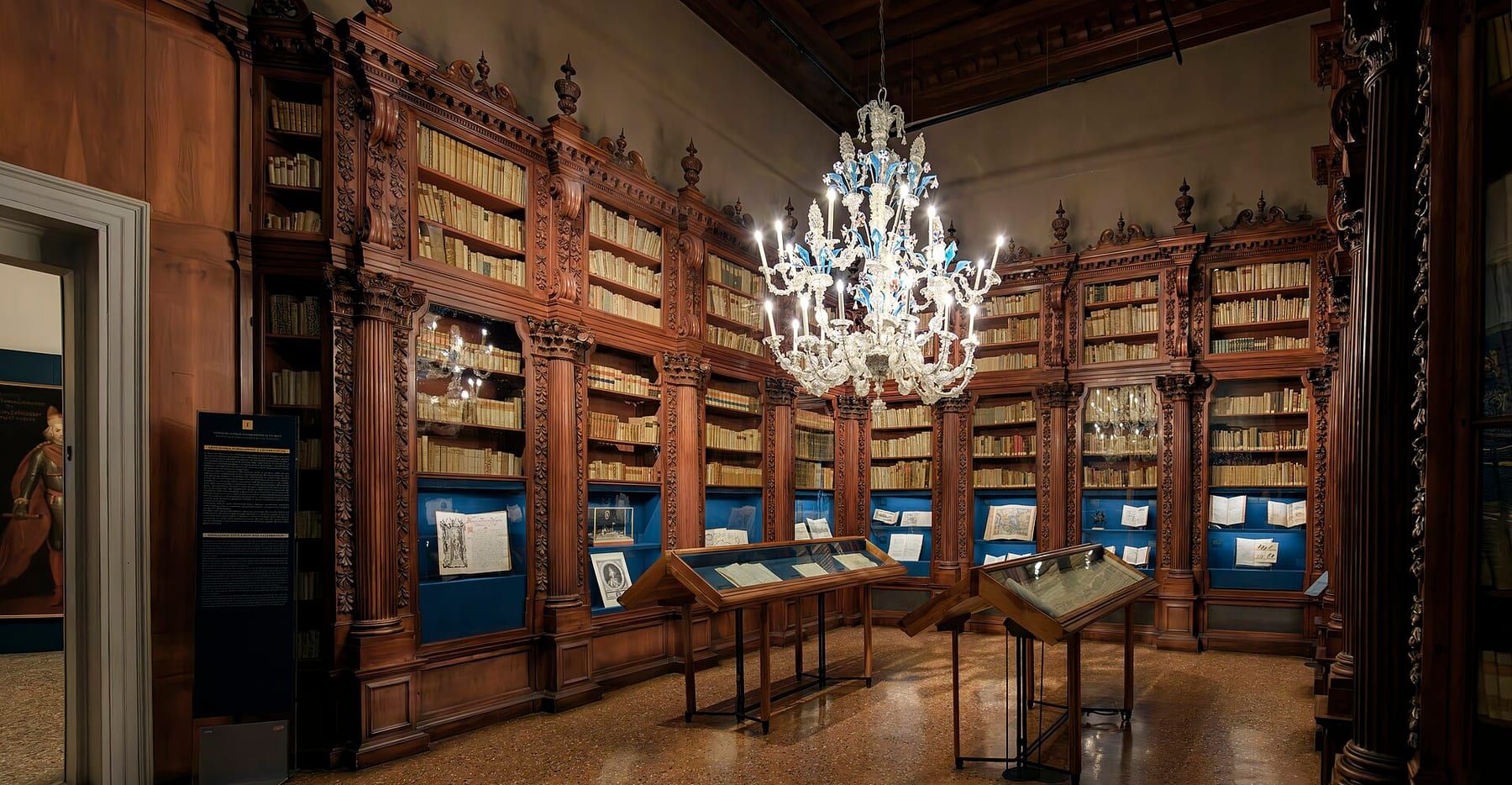
Plenty of visitors leave the Doge’s Palace without realising their ticket also covered the Museo Correr. Yet Venice’s civic museum fills the whole short side of St Mark’s Square, facing the Basilica, and deserves at least an hour and a half: Canova sculptures, Venetian painting from its beginnings to the 16th century, and rooms on the life of the Republic. On the north side of the square, above the archway into the Mercerie, the Clock Tower has been keeping time for more than five hundred years, and you can climb it, but only with a guide.
Two neighbouring sights, two different sets of rules: the Correr is included in the St Mark’s tickets and the Museum Pass, while the Clock Tower has its own limited-capacity ticket. Here’s how to get into both without overpaying. Prices are official and can change.
Tickets: how to get into the Correr and the Clock Tower
| What you want to see | Ticket | Official price |
|---|---|---|
| Correr + Doge’s Palace | St Mark’s Square Museums | €35 · €30 online 30+ days ahead · reduced €15 |
| Correr + all civic museums | MUVE Museum Pass | €50 · reduced €25 · 6 months |
| Clock Tower + Correr | Clock Tower ticket | €15 · reduced €11 |
| Clock Tower, if you already hold the St Mark’s ticket or pass | Clock Tower reduced | €11 |
| Correr Royal Rooms | Guided itinerary | €15 · reduced €11 |
The Correr has no single ticket. You get in with the St Mark’s Square Museums ticket, which also covers the National Archaeological Museum and the Monumental Rooms of the Biblioteca Marciana, with the Museum Pass, or with the Clock Tower ticket.
Here’s a detail few people notice: the Clock Tower ticket gives free entry to the Correr, the Archaeological Museum and the Marciana. If you’ve already seen the Doge’s Palace on an earlier trip, or it doesn’t interest you, €15 gets you the tower climb and the Correr instead of paying €35.
The other way round, the Clock Tower is not included in the Museum Pass or the St Mark’s ticket. Holders of either, or of a Doge’s Palace Secret Itineraries ticket, pay the €11 reduced price. The reduction also applies to ages 6–14, students 15–25, over-65s, residents, and Rolling Venice and ISIC holders; online you can only buy the age-based reductions.
-
from €35 per person
Book on Tiqets -
from €50 per person
Book on Tiqets
Tiqets has no ticket for the Clock Tower alone or for the Correr alone. The Correr is included in the Doge’s Palace entry (€35, the same as the official full price; the official site drops to €30 if you book 30 days ahead) and in the Venice Museums Pass (€50, the same as the official one, with free cancellation up to the day before). The Clock Tower is booked on the MUVE site or through the call centre.
Museo Correr: what to see
The museum grew from the collection left to the city by Teodoro Correr (1750–1830), a patrician collector. Opened to the public in 1836, since 1922 it has occupied Scamozzi’s Procuratie Nuove and the Ala Napoleonica (Napoleonic Wing), built as a royal residence on the site of Sansovino’s church of San Geminiano, demolished during the Napoleonic Kingdom of Italy. You enter by the monumental staircase of the Napoleonic Wing, on the side of the square opposite the Basilica.
The Neoclassical rooms. The route begins with the 19th-century state rooms, including the grand ballroom, and an important collection of works by Antonio Canova. Among the best known is the group Daedalus and Icarus, one of the sculptor’s early works.
Venetian civilisation. In the rooms of the Procuratie Nuove the museum explains how the Republic worked: its institutions and magistracies, the navy and the Arsenale, public festivals. Alongside are small Renaissance Venetian bronzes, ivories and Italian Renaissance ceramics.
The picture gallery. Upstairs is Venetian painting from its beginnings to the 16th century: Lorenzo Veneziano, the Bellini family (with a room of their own), Carpaccio, Cosmè Tura, Antonello da Messina and Lorenzo Lotto. Carpaccio’s famous painting known as Two Venetian Ladies is here: two women on a terrace who for centuries were mistaken for courtesans.
The Royal Rooms. In the Napoleonic Wing you can visit, only on a booked guided itinerary (€15, reduced €11), the apartments used by three dynasties, Bonaparte, Habsburg and Savoy, up to 1920. They include rooms of Empress Elisabeth of Austria, the “Sisi” of the films.
Archaeological Museum and Biblioteca Marciana. From the Correr a single route leads into the National Archaeological Museum, with Greek and Roman sculpture, and the Monumental Rooms of the Biblioteca Nazionale Marciana, overlooking the Piazzetta opposite the Doge’s Palace. They’re usually far less crowded than the Doge’s Palace.
A warning: the floors are old, uneven and slippery, and bulky luggage isn’t allowed. On summer Fridays and Saturdays the Correr has evening openings, like the Doge’s Palace.
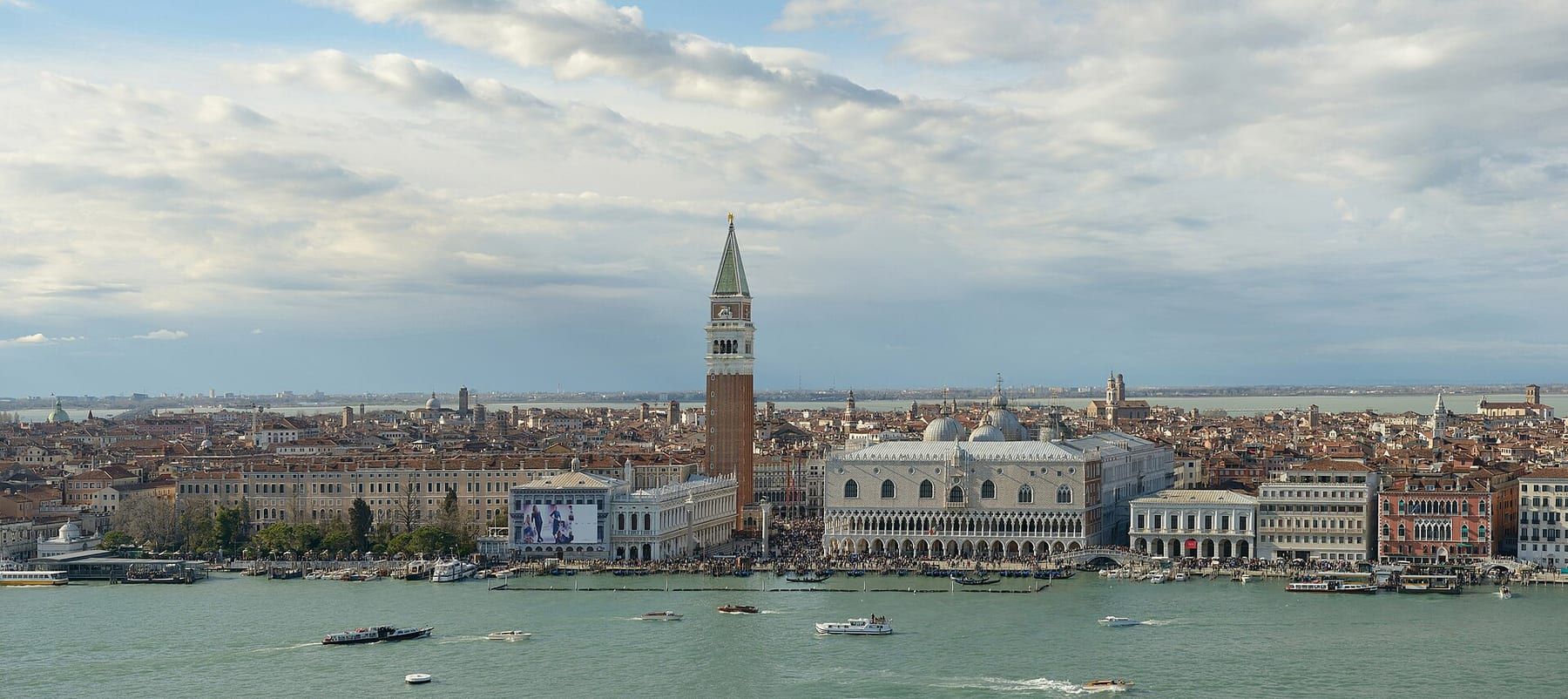
The Clock Tower: the guided tour
History and mechanism
The tower was commissioned in 1493. Work to clear the site began in 1495 and the clock was unveiled for the first time on 1 February 1499; the side wings were completed around 1505. The architecture is cautiously attributed to Mauro Codussi. The tower stands over the archway into the Mercerie, the shopping street linking San Marco to Rialto, and was designed as the focal point for anyone entering the square from the Basin.
The original mechanism was built at the end of the 15th century by Gian Carlo Ranieri and extensively modified by Bartolomeo Ferracina between 1753 and 1757. It still works perfectly: on the tour you see up close the wheels, barrels, the fans that act as an aerodynamic brake, the pendulum and escapement, and the gears driving the two clock faces, the astronomical one facing the square and the one facing the Mercerie. The sun hand makes one full turn a day.
The Moors and the Magi
At the top of the tower the two Moors, the big bronze figures that strike the hours on the bell, were cast in 1497 by Ambrogio delle Ancore; the name comes from the dark patina of the metal. The bell also dates from 1497 and is signed by one Simeone. In the 19th century the Moors and the bell were raised by about a metre. Lower down are the wooden statues of the Magi and the Angel, which come out in procession from the two side doors only twice a year, at Epiphany and Ascension. On the tour you see them close up.
How the tour works
You start up a short flight of stone steps to a small room where the tower’s history is explained, then climb level by level to the mechanism and the Moors’ terrace, with a view over St Mark’s Square, the Basilica and the lagoon.
- Length: about an hour, guided and booked only.
- Languages: English tours every day at varying times; Italian and French on set days. The weekly schedule changes with the season, so check it on the official site before planning your day.
- Meeting point: the Museo Correr ticket office, 5 minutes before the start. If you’re more than 15 minutes late you won’t be admitted.
- Restrictions: no children under 6. Not accessible for people with limited mobility: narrow, steep stairs and small spaces. Not recommended during pregnancy or for people with claustrophobia, vertigo, or heart or breathing conditions.
- Booking: at muve.vivaticket.it or through the MUVE call centre (848082000 from Italy, +39 041 42730892 from abroad). Groups are small and there are only a few departures a day: book a few days ahead.
Planning your visit
Order with the Doge’s Palace. If your St Mark’s ticket has no time slot, you can only enter the Doge’s Palace from 12:00. Use the morning for the Correr, which opens at 10:00, and perhaps the Clock Tower, then move on to the Palace in the afternoon. With a morning slot for the Palace, do it the other way round.
How long. Correr, Archaeological Museum and Marciana: an unhurried hour and a half. Clock Tower: an hour, plus five minutes early at the meeting point. On the same day as the Doge’s Palace that makes a full museum day; if you can, split it into two half days.
A sample day at San Marco. Enter the Correr when it opens at 10:00 and give the Neoclassical rooms and the picture gallery an hour and a half. Book a late-morning Clock Tower departure: the meeting point is the same ticket office, so you lose no time getting there. After lunch go to the Doge’s Palace, where untimed tickets are valid from 12:00, and allow two and a half hours for the route including the Bridge of Sighs. If you’ve booked the Basilica, remember that last entry is at 16:45 and Sunday mornings are reserved for services: fit it in between the Correr and the Palace, not at the end. On summer Fridays and Saturdays you can instead move the Doge’s Palace to the evening, when it stays open until 23:00.
Getting there. By vaporetto get off at San Marco Vallaresso or Giardinetti, a few steps from the Napoleonic Wing, or at San Zaccaria; lines 1, 2, 4.1 and 5.1. On foot from Rialto, follow the Mercerie and you’ll come out onto the square right under the Clock Tower.
Nearby
The Correr closes the west side of St Mark’s Square, with the historic cafés under the Procuratie. On the other side are St Mark’s Basilica, which needs a separate named ticket, and the Campanile. Heading down towards the Basin you’ll find the Doge’s Palace and, behind it, the Bridge of Sighs. If you’d like to add more civic museums, the €50 Museum Pass covers the Doge’s Palace, the Correr and ten other venues, from the Glass Museum to Ca’ Rezzonico.
Frequently asked questions
Is there a ticket just for the Museo Correr?
No. You get into the Correr with the St Mark's Square Museums ticket (€35, which includes the Doge's Palace), the MUVE Museum Pass (€50) or the Clock Tower ticket (€15), which gives free entry to the Correr, the Archaeological Museum and the Marciana Monumental Rooms.
Is the Clock Tower included in the Museum Pass?
No. The Clock Tower is not included in the Museum Pass or in the St Mark's ticket. Holders of either, or of a Doge's Palace Secret Itineraries ticket, do pay the €11 reduced price instead of €15.
Can I go up the Clock Tower without a guide?
No. The tower can only be visited on a booked guided tour of about an hour, meeting at the Museo Correr ticket office 5 minutes before the start. Anyone more than 15 minutes late is not admitted.
Can children climb the Clock Tower?
Only from age 6. The stairs are narrow and steep and the spaces small, so the tour is also not recommended for people with vertigo or claustrophobia, heart or breathing conditions, or during pregnancy.
When do the Magi come out of the Clock Tower?
The wooden statues of the Magi and the angel come out in procession from the side doors of the clock face twice a year, on the feasts of Epiphany and Ascension. On other days you see them close up during the guided tour.
How long does the Museo Correr take?
For the Neoclassical rooms, the picture gallery and a look at the Archaeological Museum and the Marciana, allow an hour and a half. If you're combining it with the Doge's Palace on the same day, do the Correr first: it opens at 10:00, and untimed tickets only get into the Doge's Palace from 12:00.
What are the Correr's Royal Rooms?
They are the apartments used in the 19th century by the Bonaparte, Habsburg and Savoy dynasties, including rooms of Empress Elisabeth, known as Sisi. They can only be seen on a booked guided itinerary costing €15 (reduced €11).
Official sources
- Museo Correr — Visitor information
- Museo Correr — Layout and collections
- Museo Correr — The museum
- Clock Tower — Tickets
- Clock Tower — Tour times
- Clock Tower — Accessibility
- Clock Tower — Building and history
- Clock Tower — The route
- Clock Tower — The clock machinery
- Clock Tower — The Moors and the bell
- MUVE — Clock Tower booking