Step off the train at Santa Lucia, turn left and you’re already in Cannaregio. It is the northernmost sestiere and one of the most lived-in parts of the historic centre: it starts with the crowds of the Lista di Spagna and the Strada Nova, but move one canal north and you find long straight quaysides, moored boats, washing on the line and bàcari where Venetian is spoken at the counter. This is home to the Ghetto, established by the Senate on 29 March 1516: the first in history and the one that gave its name to all the others.
You need a couple of up-to-date facts before you go. The Jewish Museum is closed for renovation, but the neighbourhood and the synagogues can be visited on guided tours. The Ca’ d’Oro is closed for restoration. The Madonna dell’Orto, Tintoretto’s church, is open and free. Below are official prices, the Tiqets alternatives and how to fit it all into half a day.
The Ghetto: a short history
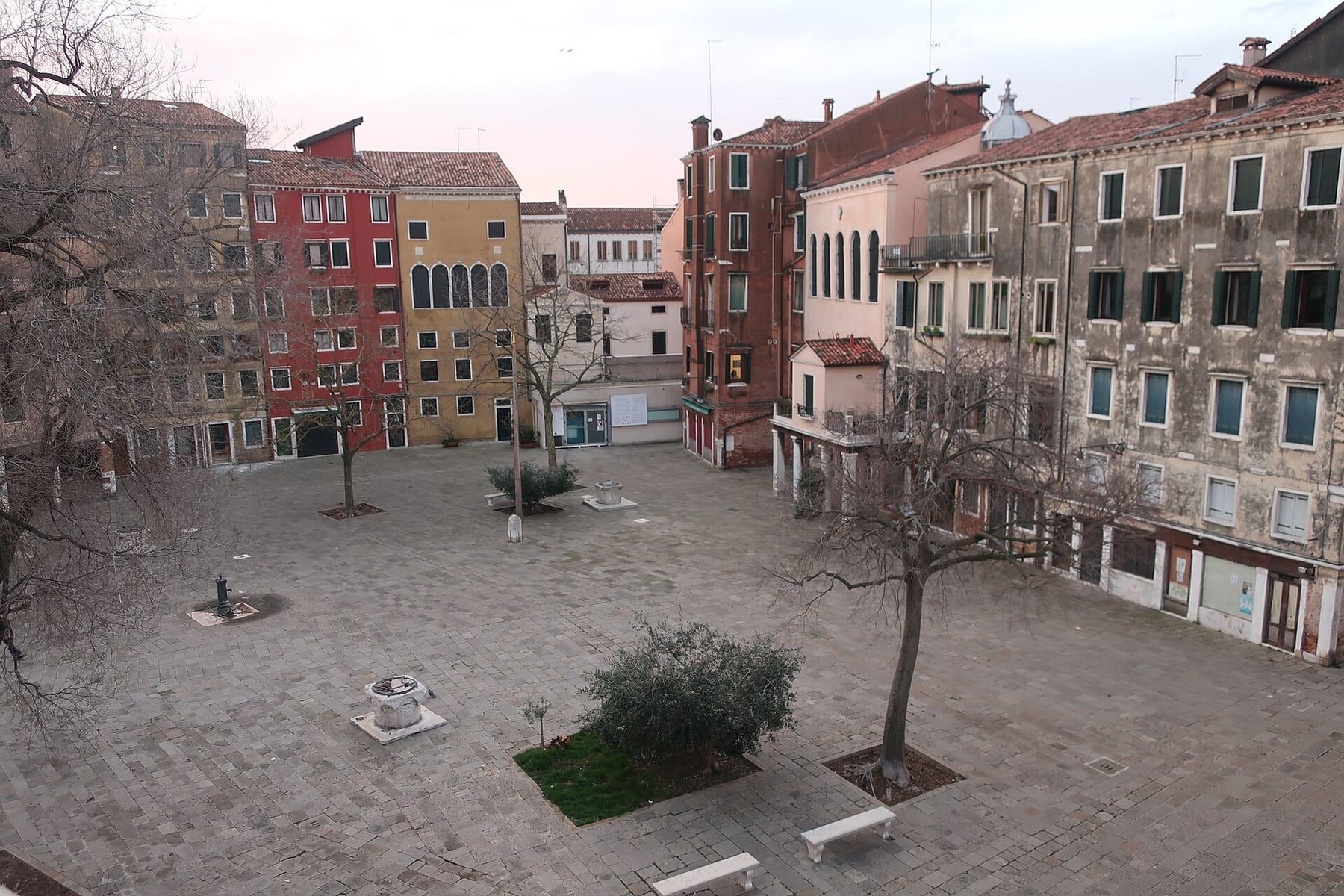
In the Middle Ages this was the site of the Republic’s public foundries, the “getto” where copper was cast. In 1516 the Senate ruled that the Jewish population must live on this island, closed by gates that opened at dawn and shut at dusk. The word, pronounced “ghetto” by Jews of German origin, came to mean segregated quarters across Europe.
The area has three parts: the Ghetto Nuovo, with its large campo and three well-heads, which despite its name is the oldest core; the Ghetto Vecchio, added later, home to the Scola Levantina and the Scola Spagnola; and the Ghetto Nuovissimo, the last extension. Space was scarce and the population grew, so the houses of the Ghetto Nuovo rise to seven or eight storeys, the tallest in Venice, with low ceilings.
The five historic synagogues, called scole, reflect the communities they served: German, Canton and Italian in the Ghetto Nuovo, Levantine and Spanish in the Ghetto Vecchio. From outside you would barely notice them: they are prayer halls on the upper floors of residential buildings, recognisable only by a row of larger windows. The Ghetto is still the centre of Venice’s Jewish community, with its bakery, care home and kosher shops; the Spanish and Levantine synagogues are in use for worship.
Visiting the synagogues: tickets and prices
The Jewish Museum on Campo del Ghetto Nuovo is closed for a major renovation project that also includes restoring some of the synagogues; reopening has been announced but without a firm date. Meanwhile the official ticketing site ghettovenezia.com sells access to the synagogues in two formats, and Tiqets has a guided tour and an audio guide.
| Option | Where | Price | What’s included |
|---|---|---|---|
| App entry | ghettovenezia.com (official) | €12 · reduced €10 · residents €7 | Access to the open synagogues, app audio guide in 5 languages |
| Guided tour | ghettovenezia.com (official) | €15 · reduced €13 · residents €10 | Guided tour, hourly departures in Italian and English |
| Private tour | ghettovenezia.com (official) | €100 (2 synagogues) or €150 (3) + €17 per person | Private guide by appointment, 6 languages |
| Audio guide | Tiqets | €16 | Ghetto, Levantine and Spanish synagogues, Biblical Garden, smartphone audio guide |
| Guided tour | Tiqets | €20 | 45-minute tour with synagogue entry |
The official channel is cheaper: €15 against €20 for the tour, €12 against €16 for app entry. On Tiqets you pay for the convenience of booking in the same app as your other tickets and for verified reviews; note that both Tiqets products are non-refundable. Prices can change, so check when you buy.
Price list compared
Live prices from our partner feeds, cheapest first. Tap a button to open the listing.
| Platform | Price | Rating | Duration | Book |
|---|---|---|---|---|
| Tiqets Venice: Jewish Quarter + Synagogue Entry Ticket + Smartphone Audio Guide Best price | €16per person | ★ 3.822 reviews | — | Book on Tiqets |
| Tiqets Venice: Jewish Quarter Guided Tour with Synagogue Entry Ticket Top rated | €20per person | ★ 4.528 reviews | 45 min | Book on Tiqets |
Which synagogues you see depends on the day and on the works: usually two. The Tiqets tour lists the Levantine (not on Friday afternoons) and the Spanish synagogue Sunday to Thursday, and the Italian one on Fridays. You can’t choose, so don’t book with a particular synagogue in mind.
Hours and rules
- Open Sunday to Thursday, normally 10:00–18:00 with last entry at 17:15; Fridays 9:00–17:00, and in the winter period (early November to early April) Friday closing is at 15:00 and last entry on other days is earlier.
- Closed on Saturdays, Jewish holidays, 1 January and 25 December.
- Free for under-6s, visitors with disabilities plus a companion, and ICOM members.
- The synagogues are places of worship: men may need to cover their heads (a kippah is usually provided at the entrance) and photography inside is generally not allowed.
The halls are on upper floors reached by narrow stairs: visitors with limited mobility should contact the ticket office first. The tour lasts about 45 minutes. Booking is advisable especially on Sundays, which is the busiest day because of the Saturday closure.
Madonna dell’Orto: Tintoretto’s church
Ten minutes’ walk north of the Ghetto, the Madonna dell’Orto is one of the finest Gothic churches in Venice, with a brick façade and statues of the apostles in niches. It was the parish of Jacopo Tintoretto, who lived a few steps away on the Fondamenta dei Mori and is buried here in the chapel to the right of the chancel, together with his children Marietta and Domenico. He worked for this church for about thirty years: the chancel holds two enormous canvases, the Last Judgement and the Adoration of the Golden Calf, and the right aisle has the Presentation of the Virgin in the Temple. There is also an altarpiece by Cima da Conegliano.
Entry is free as part of the Chorus circuit, Monday–Saturday 10:30–17:00; on Sundays the church is reserved for worship. Vaporetto stop: Madonna dell’Orto (lines 4.1/4.2 and 5.1/5.2), also served by the Alilaguna Orange line from the airport. Opposite the campo, look for Palazzo Mastelli with its camel relief, and the stone “Moors” along the quayside: Venetians call one of them “Sior Antonio Rioba”.
Ca’ d’Oro: closed for restoration
The Ca’ d’Oro, with its lace-like Gothic façade on the Grand Canal, houses the Galleria Giorgio Franchetti, the collection Baron Franchetti gave to the State. It is currently closed for restoration and rearrangement, and no reopening date has been published. The façade is best admired from the water: from vaporetto line 1, Ca’ d’Oro stop, or from the Rialto market on the opposite bank. Check the official site before you go, as the situation may change.
Fondamenta della Misericordia and Ormesini: evenings
Two parallel quaysides north of the Ghetto that turn, at sunset, into the place where Venice has its aperitivo. Along the Fondamenta degli Ormesini and its continuation, the Fondamenta della Misericordia, bàcari, osterie and bars follow one another with tables on the canal edge. Order an ombra of wine or a spritz with a few cicchetti and stand on the quayside like everyone else. Summer weekends are busy, but almost only with Venetians and students. A few tips: many places close one day a week and some kitchens stop early; to sit down for dinner, book.
Strada Nova and the Grand Canal
The Strada Nova is the wide, straight street opened in the 19th century to link the station with Rialto: the simplest route on foot, and therefore the most crowded. Shops, supermarkets, pastry shops: useful for errands rather than poetry. Along the way you pass the church of San Felice, Campo Santi Apostoli and, towards Rialto, the church of the Miracoli, clad in coloured marble, free to enter in the Chorus circuit.
On the other side of the Strada Nova, on the Grand Canal, stands Ca’ Vendramin Calergi, home of the Casino, where Richard Wagner died and where the official Carnival dinner show is held. Not far away, behind Santi Apostoli, the Teatro Malibran, run by La Fenice, stands where the Polo family house once was. For the best view of the palaces, take line 1 along the Grand Canal.
Palazzo Labia: special days only
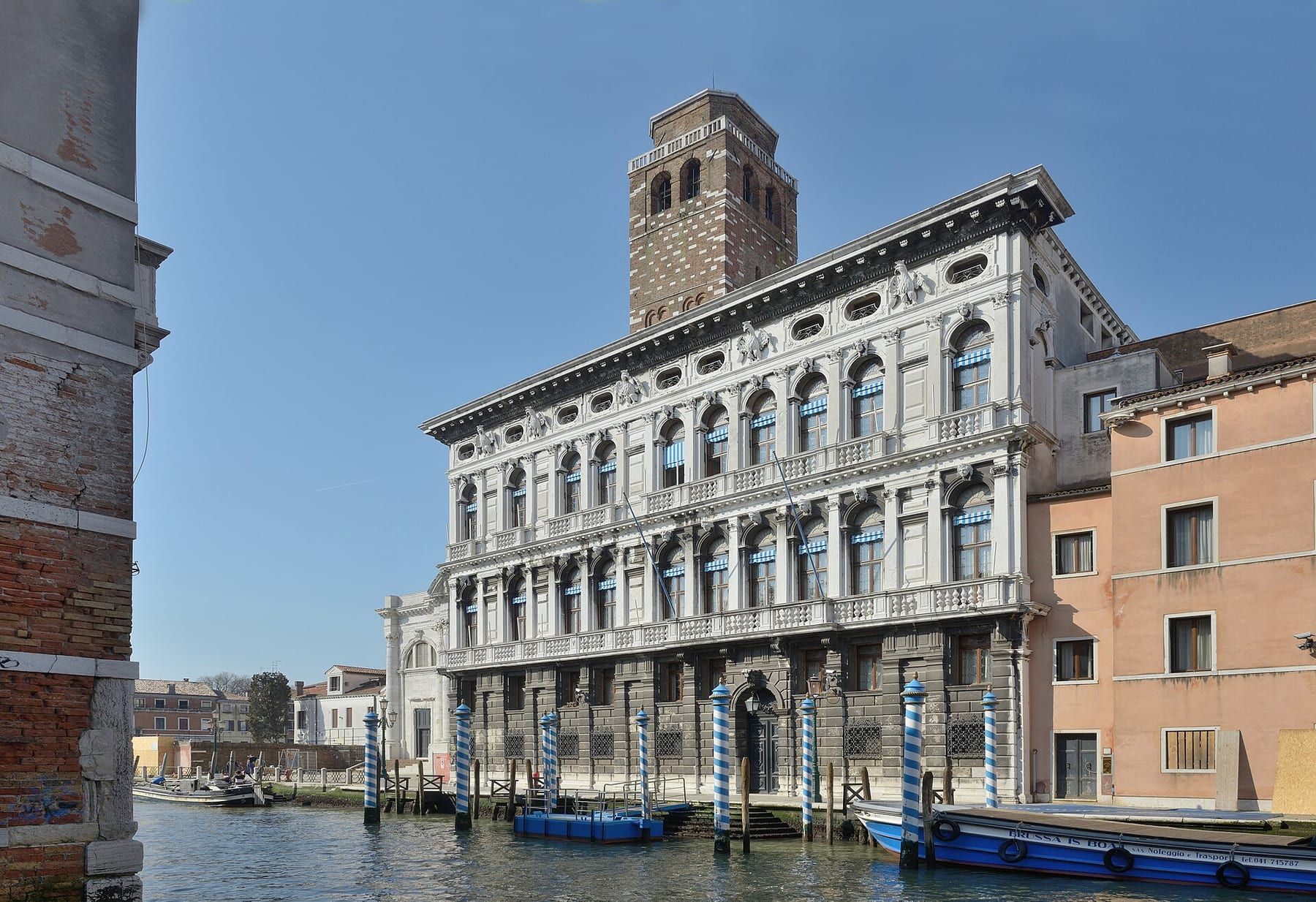
A short walk from the station, on Campo San Geremia, Palazzo Labia has Giambattista Tiepolo’s frescoes of the Stories of Antony and Cleopatra in its ballroom. The palace is the RAI’s regional headquarters and has no regular public opening: you can visit on FAI open days and at occasional events or special tours. When dates are available they may also appear on Tiqets; it’s worth checking before your trip, because places go quickly.
Getting there and around
- On foot from the station: the Ghetto is 5–10 minutes away. From the station forecourt follow the Lista di Spagna, cross the Ponte delle Guglie over the Cannaregio canal and turn left after the bridge: a low sottoportego leads into the Ghetto Vecchio.
- By vaporetto: Guglie (lines 4.1/4.2, 5.1/5.2 and Alilaguna Orange) or San Marcuola (line 1) for the Ghetto; Madonna dell’Orto for the church; Ca’ d’Oro (line 1) for the Strada Nova; Fondamente Nove for the islands. The official ACTV ticket costs €9.50 for 75 minutes; passes start at €25 for 24 hours. Details in the vaporetto guide.
- From the airport: the Alilaguna Orange line stops at Madonna dell’Orto and Guglie, handy if you’re staying in Cannaregio.
- To the islands: from the Fondamente Nove, line 12 reaches Murano Faro in 9 minutes and Burano in about 40. See Murano.
Cannaregio is part of the historic city, so on days when the Access Fee is in force, day visitors must pay it.
Half a day in Cannaregio: an itinerary
- Morning: guided synagogue tour (booked for 10:00 or 11:00), then a walk around the three campi of the Ghetto and its shops.
- Late morning: walk north along the Fondamenta degli Ormesini to the Madonna dell’Orto (closes at 17:00, free entry).
- Lunch: cicchetti in a bàcaro on the Misericordia.
- Afternoon: on to the Fondamente Nove and the vaporetto to Murano, or south along the Strada Nova to the Miracoli and Rialto, where San Polo begins.
Avoid Saturdays for the Ghetto and Sundays for the Madonna dell’Orto. With children, Campo del Ghetto Nuovo is one of the calmest squares for a break. For the city’s other themed museums, including music and Leonardo, see Jewish Museum, Leonardo and Music; for a comparison with the other districts, see the guide to the sestieri.
Frequently asked questions
Can you visit the Venice Ghetto while the Jewish Museum is closed?
Yes. The Ghetto is an open neighbourhood you can walk around freely. The synagogues are visited on the guided tours or with the app entry sold by ghettovenezia.com (€15 and €12 full price), or with the products on Tiqets (€20 for the guided tour, €16 for the audio guide).
Which synagogues does the tour include?
Normally two of the five historic synagogues, which change depending on the day and on works in progress. The Tiqets tour lists the Levantine and Spanish synagogues Sunday to Thursday and the Italian one on Fridays. You can't choose which ones you see.
Is the Ghetto open on Saturdays?
The neighbourhood is, but the synagogues and ticket office are closed on Saturdays and Jewish holidays. On Fridays they close early, at 15:00 in winter. It's best to book Sunday to Thursday.
Why is it called the Ghetto?
The area held the public foundries, the 'getto' where copper was cast. When the Senate confined the Jewish population here in 1516, the name passed to the neighbourhood and then to every ghetto in Europe.
Is the Ca' d'Oro open?
No. The Galleria Giorgio Franchetti at the Ca' d'Oro is currently closed for restoration and rearrangement, and no reopening date has been published. You get a good view of the Gothic façade from the Grand Canal, for example from line 1.
Can you visit Palazzo Labia?
Only on special days. The palace is the RAI's Venice headquarters, and the ballroom frescoed by Tiepolo opens for FAI open days or occasional events; on those dates visits may also appear on Tiqets.
How much time do you need for Cannaregio?
Half a day covers the Ghetto with a tour (45 minutes) and the Madonna dell'Orto. Add aperitivo on the Misericordia and the Strada Nova and you'll need a full afternoon into the evening.