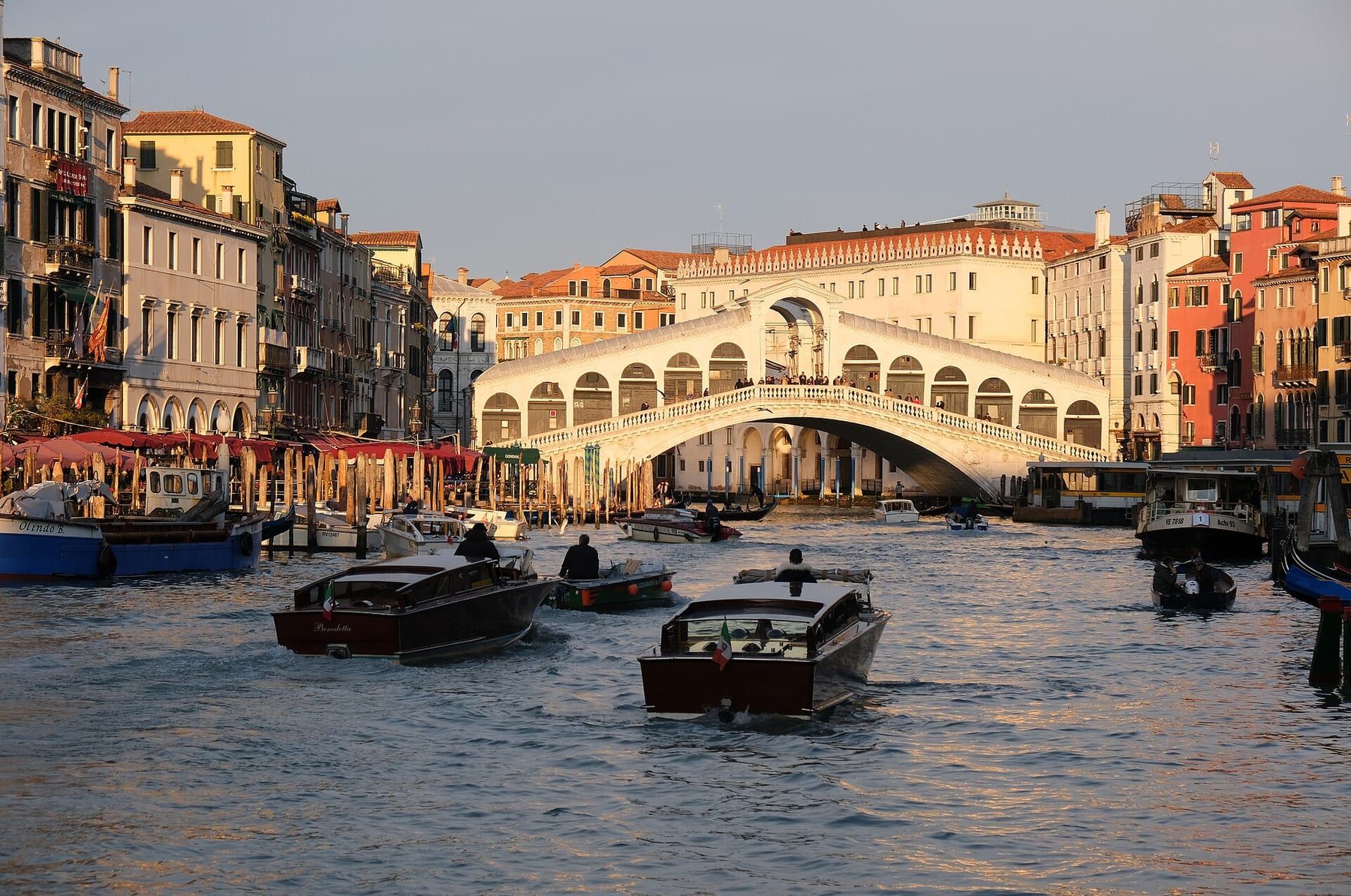
Venice is the only city in Europe where the bus is a boat and the taxi has a keel. Cars stop at Piazzale Roma and trains at Santa Lucia station: beyond that there are only alleys, bridges and canals. Public transport means the ACTV vaporetto (official ticket €9.50 for 75 minutes, passes from €25 a day), private transport means a water taxi, and the rest of the time you walk.
This page sets out the ways to arrive and to get around, with current official prices. All prices can change: where we mention a booking platform we say so clearly, and the operator’s own site is always the reference.
Arriving in Venice: airports, station, Piazzale Roma
From Marco Polo airport (VCE)
Marco Polo sits on the mainland at the edge of the lagoon. There are four ways into town, each with its own logic.
| Option | Official price | Time | Where it arrives | When to choose it |
|---|---|---|---|---|
| Alilaguna (boat) | €18 one way · €32 return | about 60–75 min to San Marco | Murano, Lido, San Zaccaria, San Marco, Zattere, Ferrovia (Blue line); up the Grand Canal to Rialto and Santa Maria del Giglio (Orange line) | Hotel near an Alilaguna stop, arriving by water |
| ATVO Airport Bus Express | €12 · €20 return | about 20 min, non-stop | Piazzale Roma | Hotel near the station or in Santa Croce, heavy luggage (unlimited bags) |
| ACTV Aerobus line 5 | €10 · €18 return | about 20–25 min | Piazzale Roma | If you then use an ACTV pass: the Aerobus is added to a pass for €7 each way |
| Water taxi | official fare €110 per boat to the historic centre | about 30 min | Landing stage nearest your hotel | Groups, families with lots of luggage, late arrivals |
From arrivals to the Alilaguna and water taxi docks it is a 7–10 minute covered walk. Buses leave from exit D. Alilaguna includes one suitcase up to 160 cm (sum of sides) plus one hand item; each extra piece costs €4.
-
from €18 per person
Book on Tiqets -
from €12 per person
Book on Tiqets -
from €39 per person
Book on Tiqets
On Tiqets the Alilaguna ticket costs €18 and the bus €12, the same as the official channels: the only benefit is having the voucher on your phone before you land. Tiqets’ €39 “water taxi” is a shared transfer, priced per person, not a private boat: for two people it costs €78, for four €156, at which point a private boat on the official tariff (€110 per boat) works out cheaper.
From Treviso airport (TSF)
Treviso handles many low-cost flights and is about 40 km away. The Barzi bus runs to Mestre station (about 30 minutes) and on to Tronchetto (about 40 minutes), for €10 one way or €18 return according to the operator’s website, with departures timed to flights. From Tronchetto the People Mover takes you to Piazzale Roma in 3–4 minutes on a €1.50 ticket. There is also a direct ATVO bus to Piazzale Roma, taking about 70 minutes: check the fare on the ATVO website.
By train: Santa Lucia and Mestre
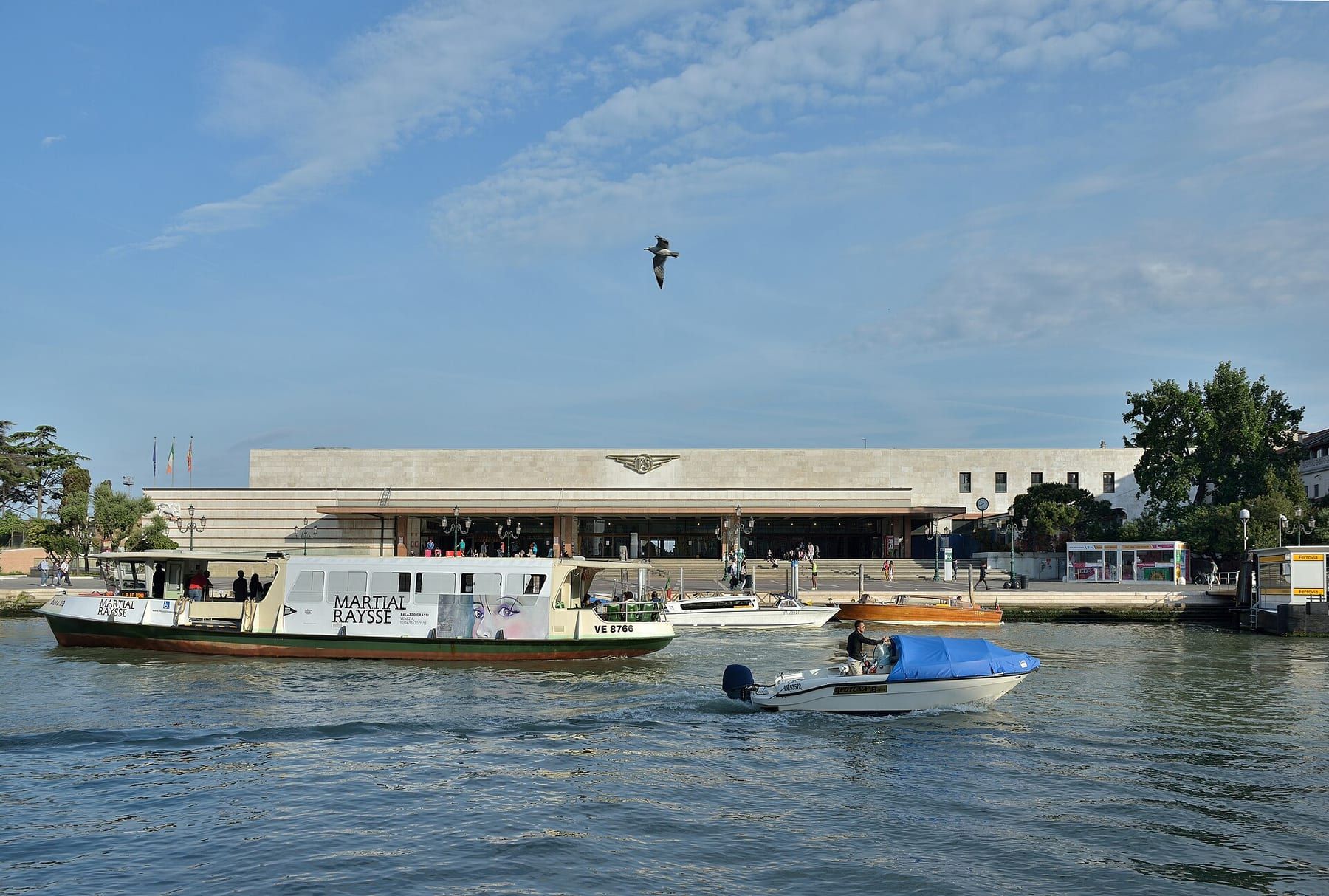
Venezia Santa Lucia station opens straight onto the Grand Canal: step outside and the “Ferrovia” vaporetto stop and the water taxi rank are right in front of you. Many trains stop first at Venezia Mestre on the mainland: if you are staying in Mestre, the two stations are about 10 minutes apart by regional train.
The official left-luggage office at Santa Lucia is along platform 1: according to the station website it opens 7:00–21:00 and costs €7 per bag for the first six hours. Handy if you have an evening train and want to explore light.
By car or coach: Piazzale Roma and Tronchetto
Piazzale Roma is the end of the line for anything on wheels: city and regional buses, the tram from Mestre, taxis and multi-storey car parks. It is a few minutes’ walk from the station across the Ponte della Costituzione. Tronchetto is the car-park island, with the car ferry to the Lido (line 17). Cars go no further than these two points.
Remember that on days when the access fee applies, day visitors must pay it before entering the historic centre: rules and exemptions are on our page about the Venice access fee.
The vaporetto: the ACTV network
The vaporetto is Venice’s bus: numbered lines, floating stops, a ticket you must validate. The official 75-minute ticket costs €9.50 and is valid on waterbuses, buses, trams and the People Mover; tourist passes for 24 hours, 48 hours, 72 hours and 7 days cost €25, €35, €45 and €65. The lines you will use most:
- Line 1: the whole Grand Canal, stopping at every landing, from Piazzale Roma and Ferrovia to San Marco and the Lido. It is also the cheapest way to see the palaces from the water.
- Line 2: the Grand Canal with fewer stops, plus Giudecca, San Giorgio and Tronchetto.
- Lines 4.1/4.2 and 5.1/5.2: circular routes round the city, useful for Fondamente Nove, Murano and the Lido.
- Line 12: from Fondamente Nove to Murano, Mazzorbo and Burano.
Fares, passes, when they pay off, the lines in detail and the rules on luggage and Rolling Venice are in our full guide to the vaporetto and ACTV tickets. For the lagoon islands see also Murano and Burano.
See vaporetto passes on Tiqets from €12 · ★ 4.4
Alilaguna: the private airport boat
Alilaguna is not ACTV: it is a private company linking the airport with the city on three lines. The Blue line loops round Venice via Murano, Lido, San Zaccaria, San Marco Giardinetti, Zattere, Giudecca and Ferrovia; the Orange line heads up the Grand Canal (Madonna dell’Orto, Guglie, San Stae, Rialto, Sant’Angelo, Ca’ Rezzonico, Santa Maria del Giglio); the Red line runs in summer only. Airport to Murano costs €10. It also sells its own passes (24 hours €40, 48 hours €60, 72 hours €80), which only pay off if it is your main way of getting around, which is rare.
The key point: ACTV tickets and passes are not valid on Alilaguna, and vice versa.
Water taxis: when they make sense
A water taxi is a private motorboat licensed by the City: it picks you up at the nearest landing and, when tides and bridges allow, drops you at your hotel door. The City’s official fares have not changed since late 2011: airport to historic centre €110, airport to Murano €60, airport to Lido €120, airport to Burano or Torcello €140, with a €10 night supplement from 22:00 to 6:00. Operators’ quotes are often higher, for luggage, extra passengers or inner canals: get the total price before you board, and ask whether it is per boat or per person.
Split between four or five people, a taxi from the airport costs little more than four Alilaguna tickets and saves an hour. For two people with light bags it is rarely worth it. To compare operators, route fares and shared transfers, there is a dedicated guide at taxi.venice.it.
Gondola and traghetto
In Venice a gondola is not transport but an experience: the official fare is €90 for 30 minutes by day and €110 for 35 minutes from 19:00, per boat not per person, with up to five passengers. Other durations are charged pro rata. How it works, where to board and the shared options are on our gondola page; for advice on choosing a route there is also gondolatour.venice.it.
The traghetto, on the other hand, is real transport: a two-oared gondola that crosses the Grand Canal where there are no bridges. It costs €2 per person, paid in cash, and locals ride it standing (you may sit; nobody minds). The crossings currently reported as running by day are Santa Sofia–Pescaria (by the Rialto market), San Tomà–Sant’Angelo and Santa Maria del Giglio–Salute. Hours change often and the service stops on Christmas Day, 26 December, New Year’s Day and 15 August: check on the spot.
On foot: the main way around
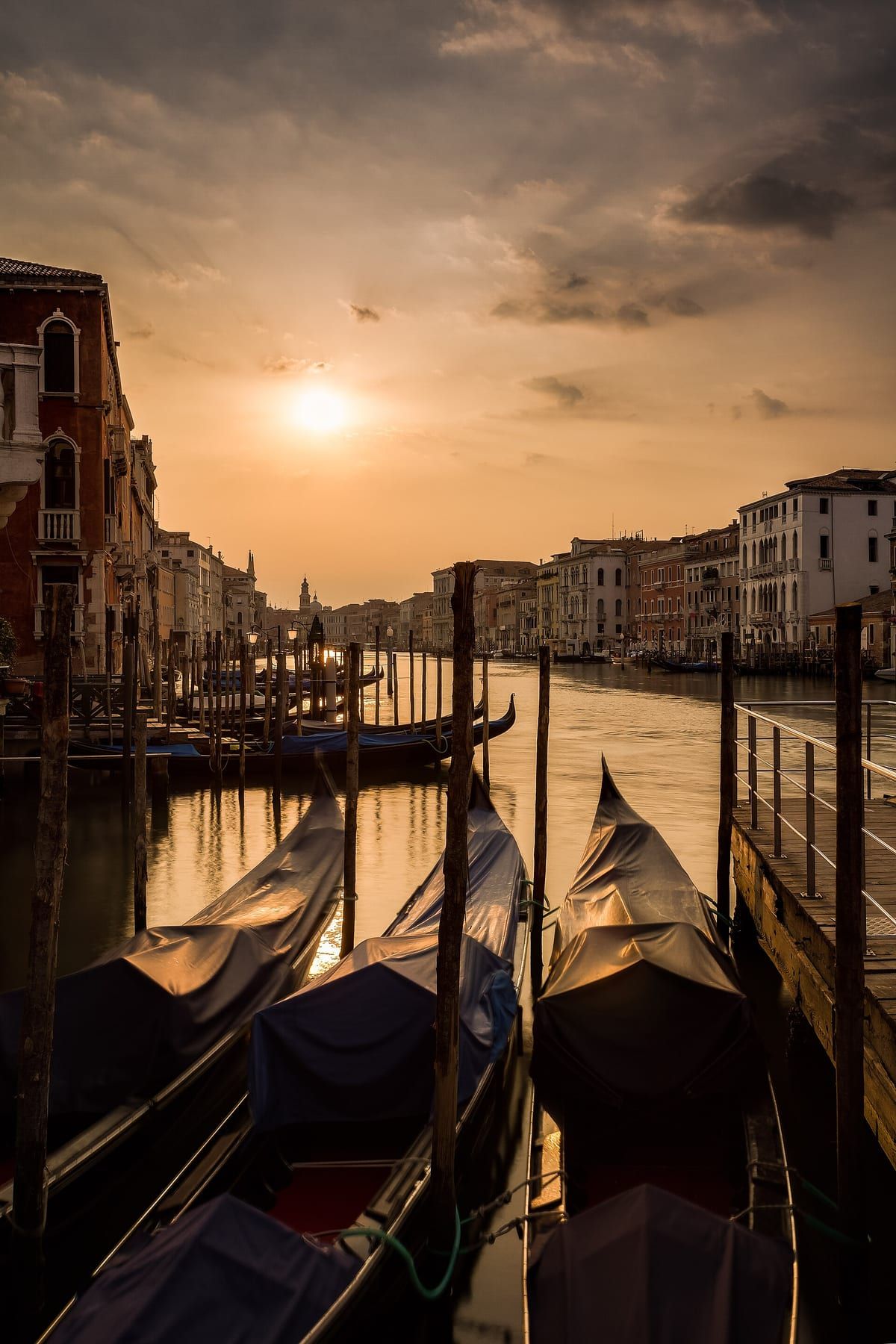
The historic centre is compact: from Santa Lucia to St Mark’s Square is about 40–50 minutes at an easy pace, from Rialto to San Marco around ten. Follow the yellow signs painted on building corners (“Per Rialto”, “Per S. Marco”, “Alla Ferrovia”, “P.le Roma”): they work better than GPS, which loses signal in narrow alleys and knows nothing about dead ends.
Two things to know. Bridges have steps, almost all of them: with a pushchair or a wheeled case it is hard work, and in a wheelchair many routes are impractical without the vaporetto. And bicycles are not allowed in the historic centre: people cycle on the Lido, which has roads and cars.
Luggage: getting around with a suitcase
The most tiring part of a Venice trip is often the stretch between the station and the hotel. On the vaporetto you may carry up to three pieces per person free, each within 150 cm total dimensions; beyond that you pay one ordinary ticket for every three extra pieces, and larger items are not carried. On Alilaguna one suitcase up to 160 cm plus one hand item are included.
On foot, count the bridges: a big wheeled case over ten bridges is a workout. If your hotel is far from a vaporetto stop, a water taxi or a porter can be worth the money. Mind the museum rules too: at the Doge’s Palace and the other Civic Museums suitcases and bags over 1 linear metre are refused, and at St Mark’s Basilica backpacks and bags over 40×30×20 cm stay outside. On departure day, it pays to leave everything in storage.

No Uber in the historic centre
Many visitors search for it, but in the historic centre of Venice Uber does not exist, for the simple reason that there are no roads for cars. Uber lists Venice among its cities, but in Italy it operates as a licensed chauffeur or taxi service and can only reach the mainland, the airport and Piazzale Roma. Road taxis charge a fixed €40 between the airport and Piazzale Roma. From there on, your options are your feet, the vaporetto or a water taxi.
Which option to choose
| Situation | Most sensible choice |
|---|---|
| Arriving at Marco Polo, hotel near San Marco or the Zattere | Alilaguna Blue line |
| Arriving at Marco Polo, hotel near the station or in Santa Croce | ATVO bus or Aerobus to Piazzale Roma |
| Group of 4–5 with suitcases | Water taxi on the official tariff |
| One day in the city, few journeys | Walk, plus one or two 75-minute tickets |
| Three days including Murano, Burano and the Lido | 72-hour ACTV pass |
| Crossing the Grand Canal far from a bridge | Traghetto for €2 |
| Staying in Mestre | Regional train or tram to Piazzale Roma |
If you are choosing where to stay based on transport, our page on Mestre sets out the pros and cons of the mainland.
Frequently asked questions
How do I get from Marco Polo airport to central Venice?
You have four options: the Alilaguna boat (€18, straight into the centre), the ATVO bus or ACTV Aerobus to Piazzale Roma (€12 or €10, about 20 minutes), or a water taxi, which costs €110 per boat to the historic centre on the city's official tariff. From the bus at Piazzale Roma you continue on foot or by vaporetto.
Is there Uber in Venice?
Not in the historic centre, because there are no cars there. Uber lists Venice, but it can only serve the mainland, the airport and Piazzale Roma as a licensed chauffeur or taxi service. In the city you walk, take the vaporetto or hire a water taxi.
How much does the vaporetto cost in Venice?
The official ACTV 75-minute ticket costs €9.50. Tourist passes cost €25 for 24 hours, €35 for 48 hours, €45 for 72 hours and €65 for 7 days. Children under 6 travel free.
Is an ACTV ticket valid on Alilaguna?
No. Alilaguna is a private company with its own fares: the airport to Venice ticket costs €18, and ACTV passes are not valid on its lines.
How much is the traghetto across the Grand Canal?
The traghetto, a two-oared gondola that shuttles between the banks, costs €2 per person, paid in cash to the gondolier. It runs by day at a few points only, for example Santa Sofia to Pescaria by the Rialto market.
How long does it take to walk from the station to St Mark's Square?
From Santa Lucia to San Marco it is about 40 to 50 minutes on foot, following the yellow signs for Rialto and San Marco, with plenty of stepped bridges. Vaporetto line 1 takes about 35 to 40 minutes, line 2 a little less.
Can I take a suitcase on the vaporetto?
Yes. Under AVM/ACTV conditions each passenger carries up to 3 pieces of luggage free, each up to 150 cm in total dimensions. Beyond that you pay one ordinary ticket per 3 extra pieces, and items over 150 cm are not allowed.