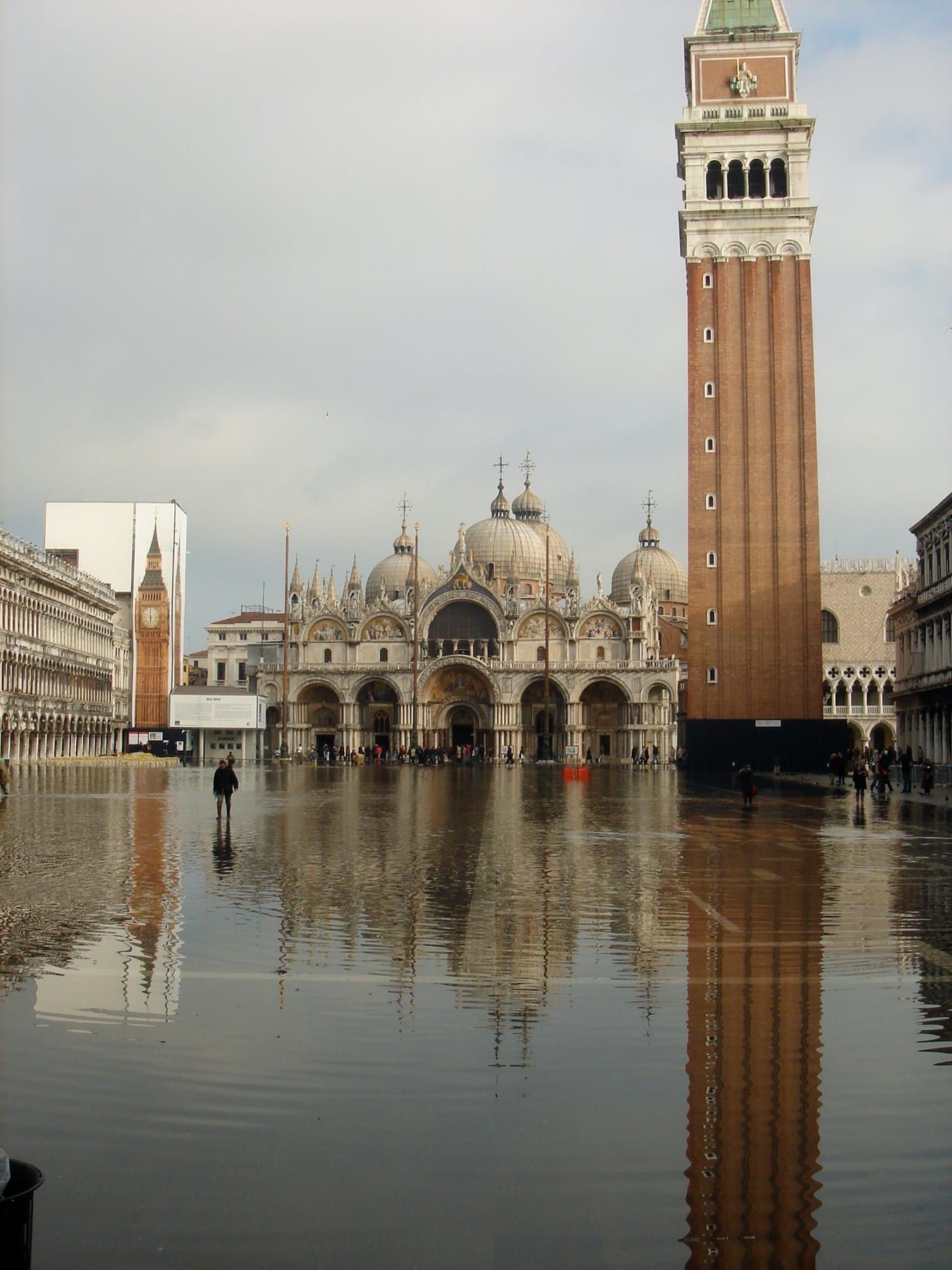
Venice in winter is a different city. From November to early February, the Christmas holidays and Carnival aside, the alleys empty, there are seats on the vaporetto and at nine in the morning you can hear your own footsteps in St Mark’s Square. In return the days are short, the damp gets into your bones, fog can wipe out the lagoon and some mornings the water rises into the Piazza.
This page explains what really changes in the cold months: how acqua alta and the MOSE barrier work, which opening hours get shorter, what happens at Carnival, Christmas and New Year, and what to pack.
Why go in winter
The main reason is the crowds, or rather their absence. In the coldest months tour groups thin out, the queues at St Mark’s Basilica and the Doge’s Palace shorten, and you can find a spot in a bàcaro without waiting. So far, too, the access fee for day visitors has never been charged in autumn or winter: the calendar has always been concentrated between spring and the end of July. The rules, and where to check the dates, are on our page about the Venice access fee.
Then there is the light. The low winter sun warms the Istrian stone façades and red brick for hours rather than minutes, and on clear days after rain the bell towers can give you a view of the snow-capped Alps beyond the lagoon. When the fog rolls in instead, Venice becomes a nineteenth-century painting: the palaces on the Grand Canal blur, the islands vanish and sounds are muffled.
The other side of the coin: the days end early, some seasonal services stop and rainy days are common. It is a season for museums, churches, concerts and long walks from one osteria to the next, not for the beach on the Lido.
Fog: what changes
Fog forms mostly on cold, windless days and can sit on the lagoon until midday. In the city it causes no trouble, quite the opposite: the alleys in fog are a sight in themselves. The problem is boats: in poor visibility vaporetti slow down and island services can build up delays. If you have a train or flight to catch, leave extra time for the boat transfer, especially if you are travelling to the airport across the lagoon.
Views from above suffer too: in low fog, climbing St Mark’s bell tower may mean seeing nothing but white. Save the climb for a clear day, ideally just after some rain.
Acqua alta and MOSE
Acqua alta is a higher than normal tide, pushed up by the moon, the sirocco wind and low pressure. High tides are most frequent between October and January, sometimes into spring. The water usually rises and falls within a few hours around the peak: it rarely floods the city all day.
The City runs a Tide Forecasting and Warning Centre that issues forecasts and, when needed, sounds the sirens. After the alarm, a series of tones tells you the forecast level:
| Signal after the siren | Forecast tide |
|---|---|
| one long steady tone | 110 cm |
| two rising tones | 120 cm |
| three rising tones | 130 cm |
| four rising tones | 140 cm or more |
For higher tides the City sets up passerelle, raised walkways that keep the main routes passable up to about 120 cm. There is also a free SMS alert service for forecasts of 110 cm and above. St Mark’s Square is among the first places to flood, because it is one of the lowest parts of the city.
The MOSE is a system of 78 mobile gates installed at the three inlets of the lagoon, Lido, Malamocco and Chioggia. For some years now it has been raised when the forecast exceeds a threshold of about 110 cm, and it has helped prevent many of the worst floods. It does not eliminate acqua alta altogether, though: tides below the threshold still wet the lowest areas, St Mark’s included.
In practice: if the forecast is high, go out in rubber boots or buy the disposable overboots sold in many shops. Around the peak some vaporetto lines change route or skip stops, because certain bridges become too low to pass under. And don’t worry too much: Venetians live with the tide, and a few hours after the peak the city is dry again.
What closes or has shorter hours
The major museums stay open all winter, with a few hours less. Here are the main differences from summer.
| Place or service | Winter hours | Note |
|---|---|---|
| Doge’s Palace | 9:00–18:00, last entry 17:00 (1 November–31 March) | Until 19:00 in summer, plus evening openings |
| Correr Museum | 10:00–17:00 (1 November–31 March) | Until 18:00 in summer |
| St Mark’s bell tower | about 9:30–19:15 | May close in bad weather |
| Glass Museum, Murano | 10:00–17:00, last entry 16:00 | November to March |
| Torcello Basilica | 10:00–17:00, last entry 16:30 | November to end of February; closed 25 December and 1 January |
| Torcello Museum | 11:00–17:00, closed Mondays | November to March |
| Traghetti | about 7:30–18:30 (Santa Maria del Giglio–Salute about 9:00–17:00) | No service 25 and 26 December and 1 January; until 13:00 on 24 and 31 December |
| Alilaguna Red line | not running | A summer line; Blue and Orange run all year |
| Lido beach establishments | closed | Summer season |
| Biennale | closed | Editions end in late November |
Hours change often, especially on public holidays: the Civic Museums publish holiday hours every year, and it pays to check the individual website before you set out. The full list of museums is on our Venice museums page.
Carnival
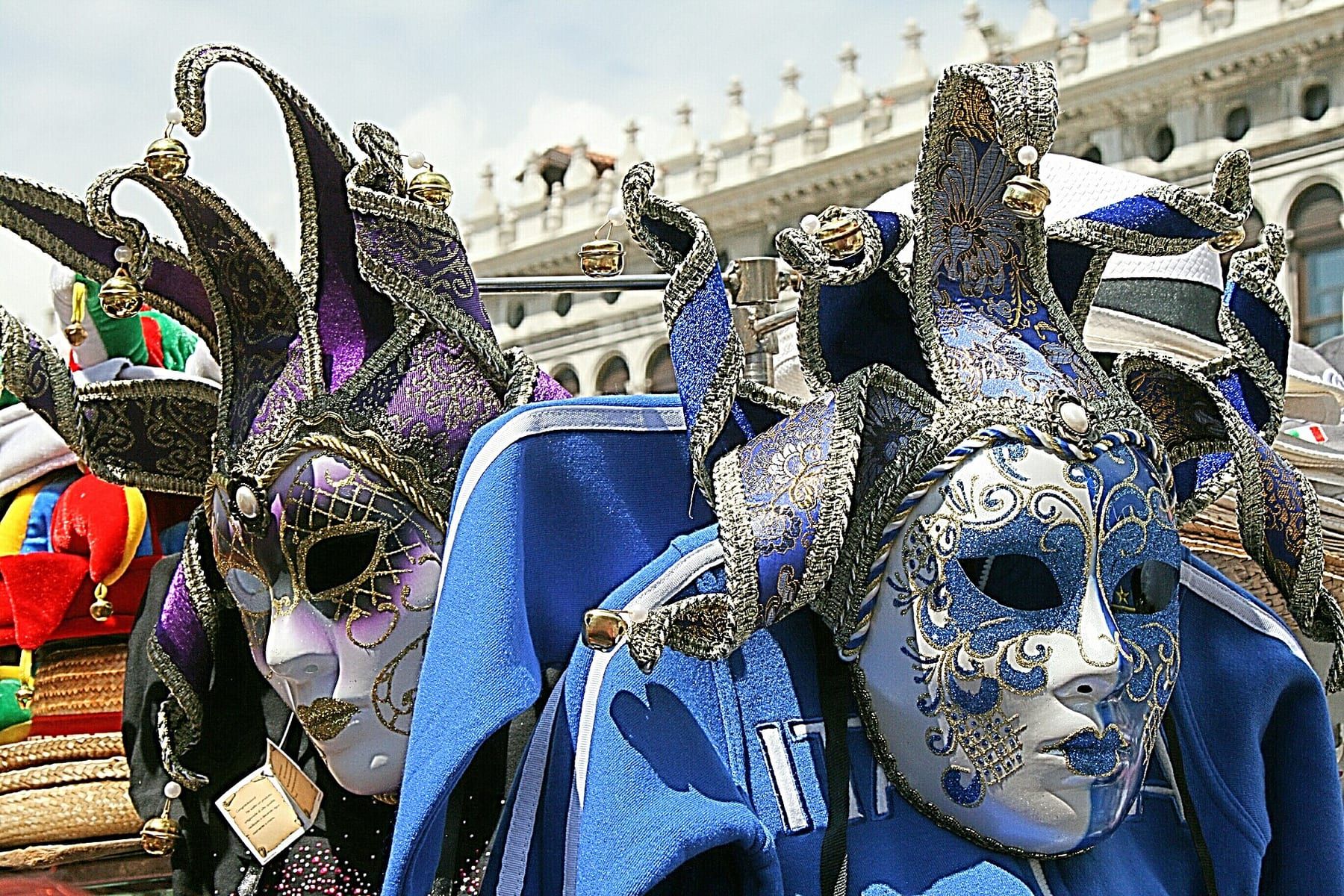
The Venice Carnival is the exception to the winter calm: for about two and a half weeks the city fills up again, and weekends can be as crowded as August. It always ends on Shrove Tuesday (Martedì Grasso), the day before Ash Wednesday, and starts on a Saturday about two and a half weeks earlier, which is why the dates shift every year, somewhere between January and early March. Each edition has a theme and a programme published on carnevale.venezia.it.
The events that come back every year:
- the Festa delle Marie, recalling twelve brides kidnapped by pirates in the tenth century and rescued under Doge Pietro Candiano III: the Marie parade by gondola on the second Saturday, and the “Maria of the Year” is proclaimed in St Mark’s Square on Shrove Tuesday;
- the Volo dell’Angelo (Flight of the Angel), usually on the first Sunday around noon, when the previous year’s Maria descends on a cable from the bell tower to the Piazza (in some years it has been changed or suspended because of works);
- the opening water parade in Cannaregio, and the contest for the most beautiful mask on the Piazza stage;
- the Svolo del Leon, which closes Carnival in St Mark’s Square on Shrove Tuesday.
Almost all the events in the Piazza are free, but on peak days entry may be capped, with one-way routes. Costume balls in the palazzi, on the other hand, are ticketed and expensive: the best known start at several hundred euros per person, costume not included. The full programme, the traditional masks and where to buy them are on our Venice Carnival page.
If you want to take home a mask you made yourself, decorating workshops run all year round, not just during Carnival.
-
from €77 per person
Book on Tiqets
Christmas, New Year and Epiphany
The festive season brings people back, especially between 26 December and 6 January, but it stays far quieter than summer.
- 21 November, Festa della Salute. It marks the end of the plague of 1630–31: during the festival a votive bridge of boats crosses the Grand Canal to the Salute basilica, and Venetians walk over in procession to light a candle.
- Christmas. Lights in the alleys, nativity scenes in the churches, Mass in St Mark’s Basilica. Many places close on 25 December: the Chorus churches, the Scala Contarini del Bovolo (closed on the 26th too), the Jewish Museum and Torcello Basilica.
- New Year’s Eve. At midnight the City puts on fireworks over St Mark’s Basin, about twenty minutes of display. According to the City the best spots are the waterfronts towards the Arsenale, namely Riva degli Schiavoni, Riva Ca’ di Dio, Riva San Biagio and Riva dei Sette Martiri, while from the Piazza and the Piazzetta the fireworks cannot be seen. Arrive early and expect packed vaporetti after midnight.
- Concerts. Between late December and January the baroque concerts in churches and scuole grandi put on special holiday programmes, and La Fenice holds its traditional New Year concert: tickets go fast, so check the theatre’s website well ahead. Everything is on our La Fenice page.
- 6 January, Regata delle Befane. Five rowers dressed as the Befana, the Epiphany witch, race on the Grand Canal to a finish under the Rialto Bridge, usually around 11:00. It is organised by the Reale Società Canottieri Bucintoro and is one of the most Venetian sights of the winter.
-
from €35 per person
Book on Tiqets -
from €32 per person
Book on Tiqets
What to wear
- Waterproof shoes with grippy soles. The Istrian stone of the bridges and quays gets slippery in the damp, and puddles in the alleys are normal.
- Layers rather than one heavy coat: outside, the humidity makes it feel colder than the thermometer says, while museums and churches swing from cold to warm.
- Hat, scarf and gloves for the vaporetto: the wind on the water, out at the bow, is the coldest part of the day.
- A compact umbrella, though in narrow, crowded alleys a hooded raincoat is more practical.
- Overboots or rubber boots if a high tide is forecast: you can buy them in town, but having them in your bag saves hunting for them with water round your ankles.
- Churches still expect appropriate dress: shoulders and knees covered at St Mark’s Basilica, even under a winter coat.
A winter day well spent
Start early at the Basilica, when the low light catches the mosaics and the queues are short. Spend late morning at the Doge’s Palace, then lunch in a bàcaro on cicchetti and an ombra of wine. In the afternoon, if it is clear, take the vaporetto to Torcello or Burano, which are almost deserted in winter and have a melancholy charm. If it rains, choose an indoor museum such as the Gallerie dell’Accademia or Ca’ Rezzonico. Catch the sunset on the Grand Canal from line 1, then end the day with a baroque concert in a church or an opera at La Fenice.
Frequently asked questions
Is Venice worth visiting in winter?
Yes, if you can accept short days and some risk of rain, fog or acqua alta. From November to early February, apart from the Christmas holidays and Carnival, there are far fewer visitors, the museums are open and so far the access fee has never been charged.
When is acqua alta in Venice?
High tides are most frequent between October and January, sometimes into spring. The City sounds sirens when the forecast exceeds 110 cm, and above a certain threshold the MOSE barrier closes the lagoon inlets.
What happens if I get caught by acqua alta?
The water usually rises and falls within a few hours around the peak of the tide. Raised walkways keep the main routes passable up to about 120 cm, and shops in the city sell disposable rubber overboots. St Mark's Square is among the first places to flood.
How do I read the acqua alta sirens?
After the siren comes a series of tones: one long steady tone means 110 cm forecast, two rising tones 120 cm, three 130 cm and four 140 cm or more. The City also runs a free SMS alert service for forecasts of 110 cm and above.
When is the Venice Carnival?
It always ends on Shrove Tuesday, the day before Ash Wednesday, and starts on a Saturday about two and a half weeks earlier. The dates move every year with Easter and are published on carnevale.venezia.it.
Where can you watch the New Year's Eve fireworks in Venice?
The midnight fireworks are set off over St Mark's Basin and last about twenty minutes. According to the City the best views are from the waterfronts towards the Arsenale, such as Riva degli Schiavoni, Ca' di Dio, San Biagio and Sette Martiri, not from the Piazza or the Piazzetta.
Are museums open at Christmas and New Year?
It depends on the museum. The Chorus churches close on Christmas Day and 1 January, the Scala Contarini del Bovolo closes on 25 and 26 December, and the Civic Museums publish holiday hours every year. Always check the individual museum's website.
Official sources
- City of Venice — Tide Forecasting and Warning Centre
- City of Venice — Acqua alta warning sirens
- Venice Carnival — official website
- City of Venice — New Year's Eve in Venice
- Reale Società Canottieri Bucintoro — Regata delle Befane
- Doge's Palace — visitor information
- Glass Museum — opening times
- Patriarchate of Venice — Torcello Basilica
- Chorus Venezia — visitor information