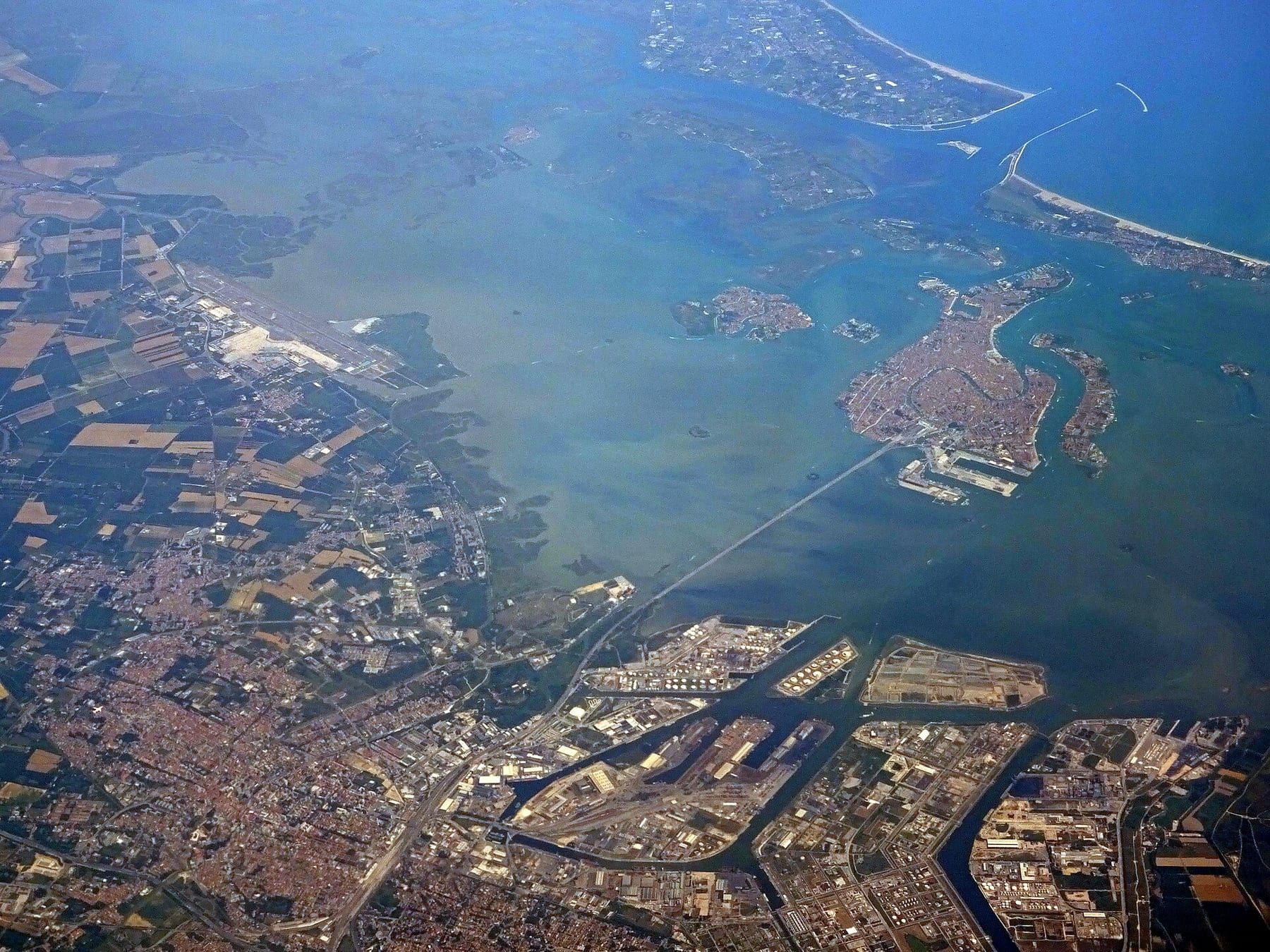
Mestre is Venice on the mainland: the modern city at the far end of the Ponte della Libertà, administratively part of the same Comune and today its most populated area. Anyone looking at a hotel in Mestre, Venice, usually has one clear question: is it worth staying here to save money, and how awkward is it to get into Venice every day? The short answer is that it’s easy: 10 minutes by train to Santa Lucia, or a tram or bus to Piazzale Roma on a €1.50 ticket. The long answer, with the pros, the cons and the Access Fee, is on this page.
A word of warning first: Mestre is not postcard Venice. It is a mainland city with roads, traffic, apartment blocks and shopping centres, and a small, pleasant old centre around Piazza Ferretto. If you book a hotel “in Venice” and the address turns out to be in Mestre, bear in mind that to see a canal you have to cross the lagoon.
Why stay in Mestre
The main reason is price. Hotels around Venezia Mestre station and in the centre usually cost less than those in the historic centre, especially at weekends, during Carnival and in high season. There are other practical advantages too:
- Car: if you arrive by car, parking is easier in Mestre, often at the hotel itself, rather than paying for the garages at Piazzale Roma or Tronchetto.
- Luggage: no bridges with suitcases; from Mestre station many hotels are within walking distance or a short tram ride.
- Trains: Mestre station also has trains to Padua, Verona and the rest of the Veneto, often more convenient than from Santa Lucia.
- Treviso airport: the Barzi bus links the airport with Mestre station in about 30 minutes, for €10 (return €18).
The downsides need weighing up. You miss Venice in the evening and early morning, which is when it is at its best, after the day-trippers have gone. You add two transfers every day. And the area around the station feels like the station district of any mid-sized city, not like a lagoon. Our advice: for one or two nights, staying in the historic centre, even in a simple hotel, is often worth the difference; for longer stays, families or travellers with a car, Mestre makes a lot of sense.
In Mestre, as in the rest of the Comune, overnight guests pay the tourist tax (imposta di soggiorno) to their accommodation: it is separate from the Access Fee, and the rates depend on the type of accommodation.
How to get to Venice from Mestre
| Transport | From / to | Time | Price |
|---|---|---|---|
| Regional train | Venezia Mestre → Venezia Santa Lucia | about 10 minutes, several an hour | Trenitalia fare, a few euros |
| Tram T1 | Central Mestre → Piazzale Roma over the Ponte della Libertà | usually a quarter of an hour or a little more | €1.50 (road network, 75 min) |
| ACTV bus | various lines → Piazzale Roma | varies with traffic | €1.50 (road network, 75 min) |
| Venezia Daily Pass | regional trains, trams, buses and waterbuses within the Comune | 24 hours | €25 |
By train
This is the fastest and simplest way: from Venezia Mestre station to Venezia Santa Lucia takes about 10 minutes, with several trains every hour throughout the day, because almost every train heading for the historic centre stops at Mestre. Buy the regional ticket from Trenitalia machines, in the app or online. As you walk out of Santa Lucia you are already on the Grand Canal, with the vaporetto in front of you and Cannaregio to your left. Check the time of the last train if you plan to have dinner in Venice.
By tram and bus
Tram T1 links Mestre with Piazzale Roma over the Ponte della Libertà, with frequent daytime services; ACTV buses run the same route from various parts of Mestre and Marghera. The ticket is the road-network one: €1.50 for 75 minutes, valid on buses, trams and the People Mover, compared with €9.50 for a waterbus ticket. From Piazzale Roma you are a few steps from the station and the Ponte della Costituzione, and can carry on on foot or by vaporetto.
With a pass
If you will also use waterbuses during the day, the €25 Venezia Daily Pass for 24 hours is the smartest choice: it is the only ACTV pass that also includes Trenitalia regional trains within the Comune, as well as waterbuses, Mestre buses and trams and the People Mover. For the other durations and a comparison with single tickets, see the ACTV vaporetto page; all connections, from the airport to the car parks, are on the Venice transport page.
The Access Fee: what changes if you stay in Mestre
The Access Fee (contributo di accesso) is charged for entering the historic city (centre, Giudecca, San Giorgio) on days set by the Comune, mainly spring and summer weekends, between 8:30 and 16:00. Mestre is not in the fee area: you can wander around it freely on any day.
If you are staying in Mestre, the rule is this:
- You are exempt from paying from arrival day to departure day, because you are staying in accommodation within the Comune di Venezia, Mestre included.
- You must still register: on charged days you need the exemption QR code, obtained from the official Access Fee portal, often with your hotel’s help.
- Day visitors who are not staying in the Comune (for example coming from Padua or from a hotel outside it) pay the fee, €5 if booked by the fourth day before or €10 in the last three days.
- The station and Piazzale Roma are excluded: if you only stop there, for example to change, you don’t pay the fee.
The up-to-date calendar, other exemptions and fines are on the Access Fee page.
M9 – Museo del ‘900
Mestre’s most interesting cultural attraction is M9, the museum devoted to the history of 20th-century Italy, in a contemporary complex designed by the Berlin practice Sauerbruch Hutton, with façades of coloured ceramic tiles a short walk from Piazza Ferretto. It is unlike any other museum in Venice: the permanent exhibition, on two floors, is almost entirely multimedia, with videos, interactive installations and virtual-reality stations, and tells in eight sections how Italians’ population, consumption, work, cities, politics and everyday life changed over a century. A third floor hosts temporary exhibitions, from photography to design.
| Ticket | Official price | On Tiqets |
|---|---|---|
| Permanent exhibition | €12 | €12.50 |
| Reduced (under 18, students under 26, over 65, groups) | €8 | — |
| Family | €20 | — |
| Children under 6 | free | — |
Hours: Wednesday to Friday 10:00–18:00, Saturday and Sunday 10:00–19:00, closed Monday and Tuesday. The address is Via Giovanni Pascoli 9, about twenty minutes on foot from Mestre station or a short tram ride. Allow at least two hours.
On Tiqets the ticket costs €12.50, €0.50 more than the official price, and is non-refundable: it is only worth it if you want all your trip’s tickets in one app. The museum’s website sells the ticket at €12 and is the only channel for reduced and family tickets. It’s a good choice for a rainy day or for travelling with teenagers, thanks to the interactive displays.
-
from €12.5 per person
Book on Tiqets
Forte Marghera
Forte Marghera is a large 19th-century fortress on the edge of the lagoon, begun in 1805 by the Austrians and extended under Napoleon to guard the approach to Venice from the mainland. Today the site is a park with canals, bastions and restored military buildings, with free entry, bars, restaurants, workshops and a programme of events and exhibitions; it has also hosted special projects of the Biennale Arte. You get there by bus from Mestre station or by tram T1 (San Marco – Forte Marghera stop). Ideal on a summer evening, for a drink away from the crowds.
What not to expect in Mestre
Mestre has a lively centre around Piazza Ferretto, with arcades, cafés and the civic tower, and pleasant pedestrian streets for dinner. But if you have seen photos of Venice, adjust your expectations:
- No postcard canals and no gondolas: the waterways through Mestre are mainland canals, not Venetian rii.
- No Gothic palaces or Venetian campi: the architecture is mostly 20th-century.
- Traffic and cars: it is an ordinary city, with junctions and car parks.
- Marghera, just to the south, is a port and industrial area.
That said, in the evening Mestre is a real city with real-city prices: a pizza or a drink in Piazza Ferretto costs less than in the historic centre.
A typical day from Mestre
- Early morning: train to Santa Lucia, 10 minutes, and you are on the Grand Canal before the groups.
- 24-hour pass if you plan to use waterbuses and visit the islands: it covers the train back too.
- A day in the historic centre: San Marco, Rialto, the islands; for a route, see Venice in one day.
- Evening: back by train or tram after sunset, dinner in Piazza Ferretto.
- Rainy day or rest day: M9 (but remember it is closed Monday and Tuesday) and Forte Marghera.
Practical tips
- Choose a hotel near the station or the tram: every extra stop adds time.
- Evening train times: check them before dinner; the tram and some buses are an alternative.
- Access Fee registration: ask your hotel how to get the exemption QR code before any charged days.
- Suitcases: from Mestre station many hotels can be reached on foot, with no bridges or steps.
- Venice museums: to decide what to book in the historic centre, start from the Venice museums page.
Frequently asked questions
How long does it take from Mestre to Venice?
By train about 10 minutes from Venezia Mestre station to Venezia Santa Lucia, with several trains every hour. By tram or bus to Piazzale Roma it depends on where you board and on traffic over the Ponte della Libertà, usually a quarter of an hour or a little more from central Mestre.
How much does it cost to get from Mestre to Venice?
The ACTV ticket for buses, trams and the People Mover costs €1.50 and is valid for 75 minutes; the regional train has a Trenitalia fare of a few euros. The €25 Venezia Daily Pass for 24 hours covers waterbuses, buses, trams and also regional trains within the Comune.
If I stay in Mestre, do I have to pay the Venice Access Fee?
No. Guests of any accommodation in the Comune di Venezia, Mestre included, are exempt from arrival day to departure day. On charged days, though, you still need to register on the official portal and get the exemption QR code.
Is it better to stay in Mestre or in Venice?
Mestre makes sense if budget matters: hotels usually cost less and are a few minutes by train or tram from the historic centre. But you lose Venice in the evening and add a round trip each day; if you only have one night, staying in the lagoon is often worth the difference.
What is there to see in Mestre?
The M9 museum, devoted to the history of 20th-century Italy with a multimedia display, Piazza Ferretto and the pedestrian centre, and Forte Marghera, a 19th-century fortress with bars, events and exhibition spaces. Don't expect canals and palaces like those in the historic centre.
How much is the M9 museum and when is it open?
The official ticket for the permanent exhibition costs €12, reduced €8, family €20, free for under-6s. It is open Wednesday to Friday 10:00–18:00 and Saturday and Sunday 10:00–19:00, closed Monday and Tuesday; on Tiqets the same ticket costs €12.50.
Is Mestre part of Venice?
Yes, administratively Mestre is part of the Comune di Venezia and its most populous area. As a city, though, it is something else: a modern mainland town with roads, cars and 20th-century buildings, linked to historic Venice by the Ponte della Libertà.